
Jack (11) observed that ‘Sometimes when I’m angry or upset, I don’t feel like I’m the real me. But then I meditate and I find that I am the real me.’
Lucy (10) described that, ‘When you’re not doing meditation, you sort of … have a snap inside you. As if you are always getting ready to snap. But when you do meditation, the goodness comes out.’ In other words, the children recognised that the goodness deep inside themselves and others is who they really are.
These insights are genuine, insightful spiritual knowledge, which is very different to mental or conceptual knowledge. But, although it is very true and very real, it is almost impossible to express in words because it is knowledge of the heart, not of the mind.
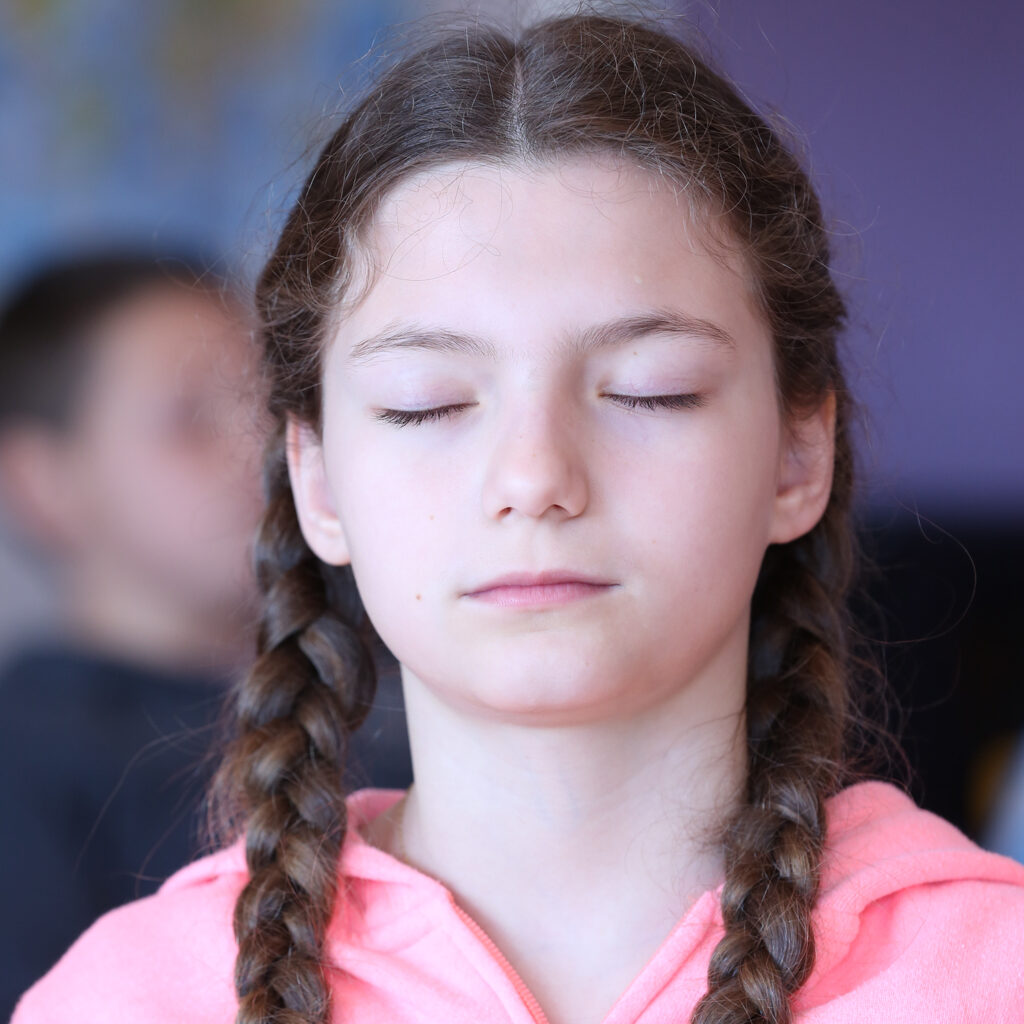
For many of the children I interviewed the practice of meditation provided an opportunity to experience over and over again that heartfelt sense of presence that transcends them, yet makes itself felt, however subtly. Pamela (11) described meditation metaphorically as like a mother feeding her baby, but, she added, ‘Your spirit is the baby … And God is the mother.’

Many of the children, even in non-faith schools, came from families committed to a particular faith tradition. It is no surprise then that many described meditation as bringing them closer to God which is another way of expressing their understanding that meditation enkindled and nurtured their innate spirituality. Nevan (11) expressed this very succinctly: “Meditation helps me to connect with God because normally we are so busy and we don’t pay attention to God. But when we meditate, we get about time to connect with God. I take a few minutes, not to talk to him, but to be with him, to feel closer to him.”
Alex, a 12-year old Canadian girl, described to her teacher how she interpreted the bell ringing at the start of meditation. She imagines it is God ringing her doorbell and she opens her heart to let Him in. evan
As well as nourishing their spirituality – helping them to discover their true-self, who they really are in God – many also spoke of how they experienced meditation as a form of guidance, nudging them in the direction of acting responsibly and doing the right thing. For example, Sophie (8) found meditation made her a kinder person: ‘When I let go of the things that are bothering me, it’s like I’ve become a kinder person’. Derek (9) felt that meditation ‘releases kindness in you … and makes you feel more open-minded.’
Adrian (11), said that meditation helps to shut down his brain and open his heart., making him a kinder person. And Barry (10), said ‘Meditation helps me to understand that if someone is behaving badly, there is still goodness inside of them. And if they meditated they might realise that for themselves.’ Because he could see this deep truth about another person, even when they couldn’t because of anger or stress, he was able to respond rather than react if they behaved badly towards him.
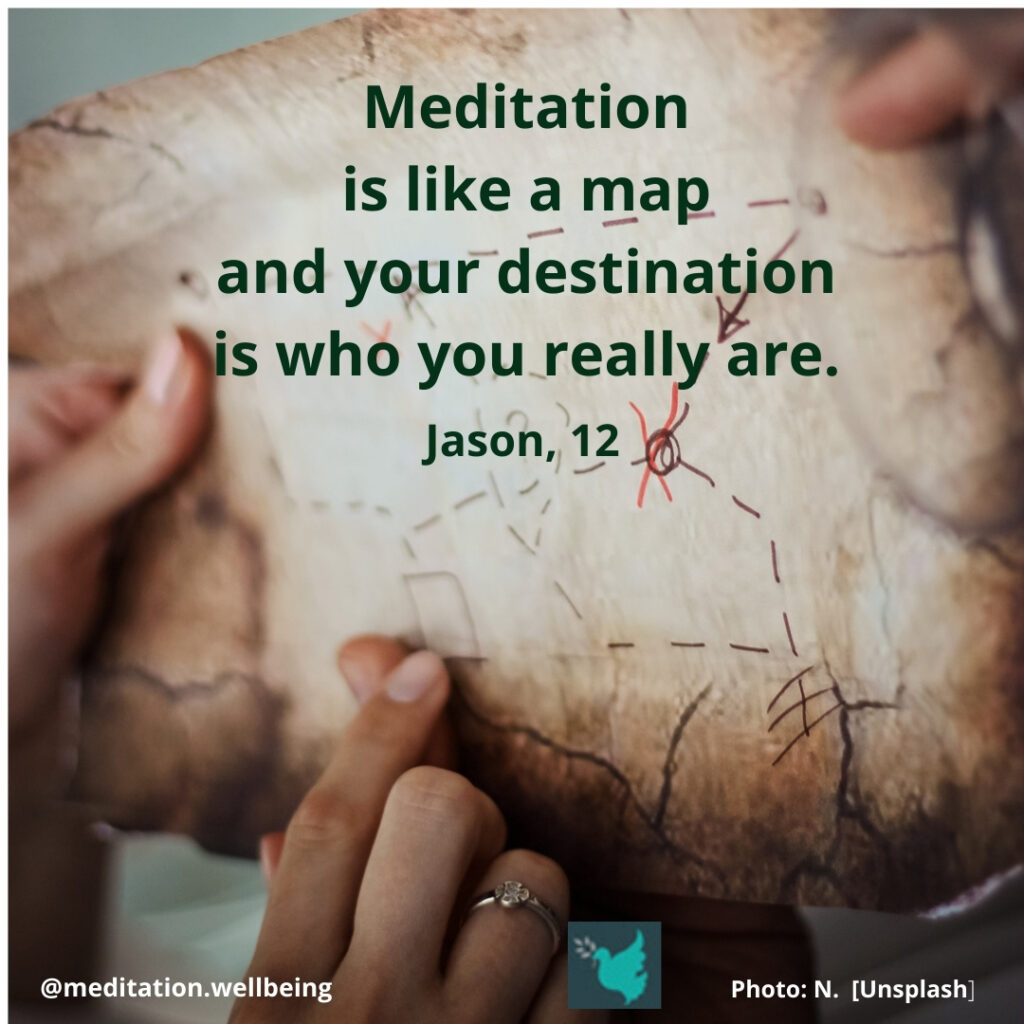
All of these quotes point to the fact that these children experienced a strong heartfelt sense of inner, spiritual nourishment as a fruit of the practice of meditation. Jason, a 12-year old boy who had meditated in school for 8 years, captured the sense of this beautifully when he said: ‘Meditation pulls you … Meditation is like a map and the destination is who you really are.’ In many ways, that single metaphor summarises the four fruits of meditation as described by the children and the wisdom traditions, including our own Christian tradition.
John Main was referring to this dawning of spiritual knowledge when he suggested that meditation moves the centre of gravity of the person from the head to the heart. Through meditation we come to know who we truly are. We discover our true selves – who we are in God and who God is in us. Our sense of who we are is no longer grounded in the ego, but in God. And we begin to live out of that way of seeing.
Through meditation you begin to awaken to the language of the heart, the language of silence. Spiritual knowledge is intuitive, it arises from being calmly present to reality and it requires no mental processing. The meditator comes to know that ‘mystery can indeed be known without being solved, without being understood’. It is remarkable that children were so very able to give simple but very rich metaphorical expression to their own deepest inner experience, to that very deep truth. Meditation has the capacity to nurture the spirituality of children both within and outside of any religious context.