

Since January 2026, Christian Meditation Ireland and Balally Parish in South Dublin have held a monthly series of events on the Rule of St Benedict usually on the last Saturday of each month from 3 pm to 7 pm. The program explores how ordinary men and women can strive to live the Benedictine Rule in the course of their everyday lives in the modern, busy world.
There will be no meeting in August – the next event will take place on Saturday, 19 September, beginning at the earlier time of 11 am and concluding with a Vigil Eucharist at 6 pm. The guest speaker will be Judith Valente, author of ‘How To Be A Contemplative‘ and a retreat leader on living a more contemplative life and discovering inner wisdom through poetry.
She will give three talks during the day beginning at 11 am with ‘Yearning for Life: On Walking Up in the Prologue of the Rule.’ Following a light lunch at 1 pm, her second talk at 2 pm will address the theme ‘Linking Arms: A 21st Century Vision of Community.’ Following a coffee break at 3 pm, the final talk at 4 pm will speak to ‘Relationship Repair in the Rule of St Benedict’.
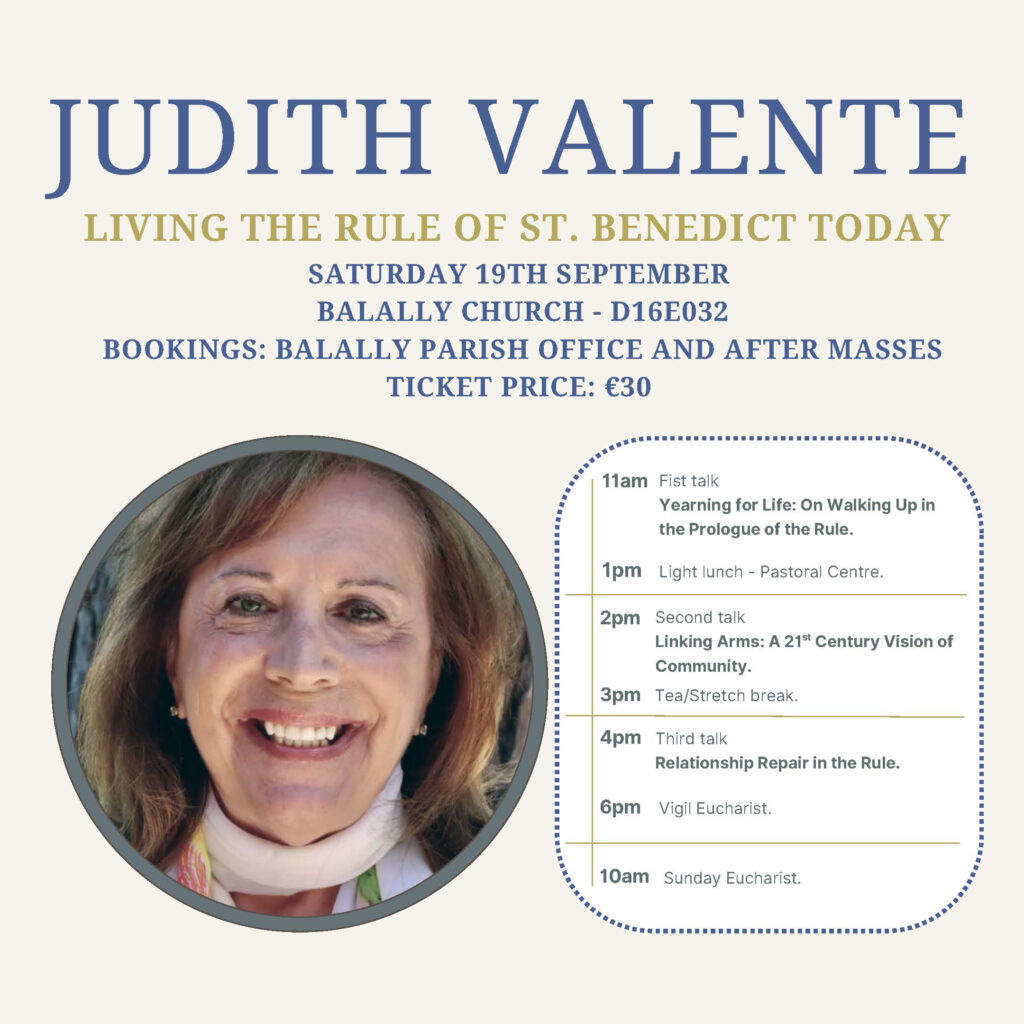
Judith is an oblate of the Benedictine monastery of St. Scholastica in Atchison, Kansas. Her most recent books include ‘How To Live: What The Rule of St. Benedict Teaches Us About Happiness, Meaning and Communty‘ and ‘The Art of Pausing: Meditation for the Overworked and Overwhelmed.’
The fee for this event is €30 including lunch and refreshments. For further information email cinziaangius@balallyparish.ie
The final three talks in the series will take place on Saturday, 31 October, Saturday 21 November and Saturday 12 December from 3-6 pm.
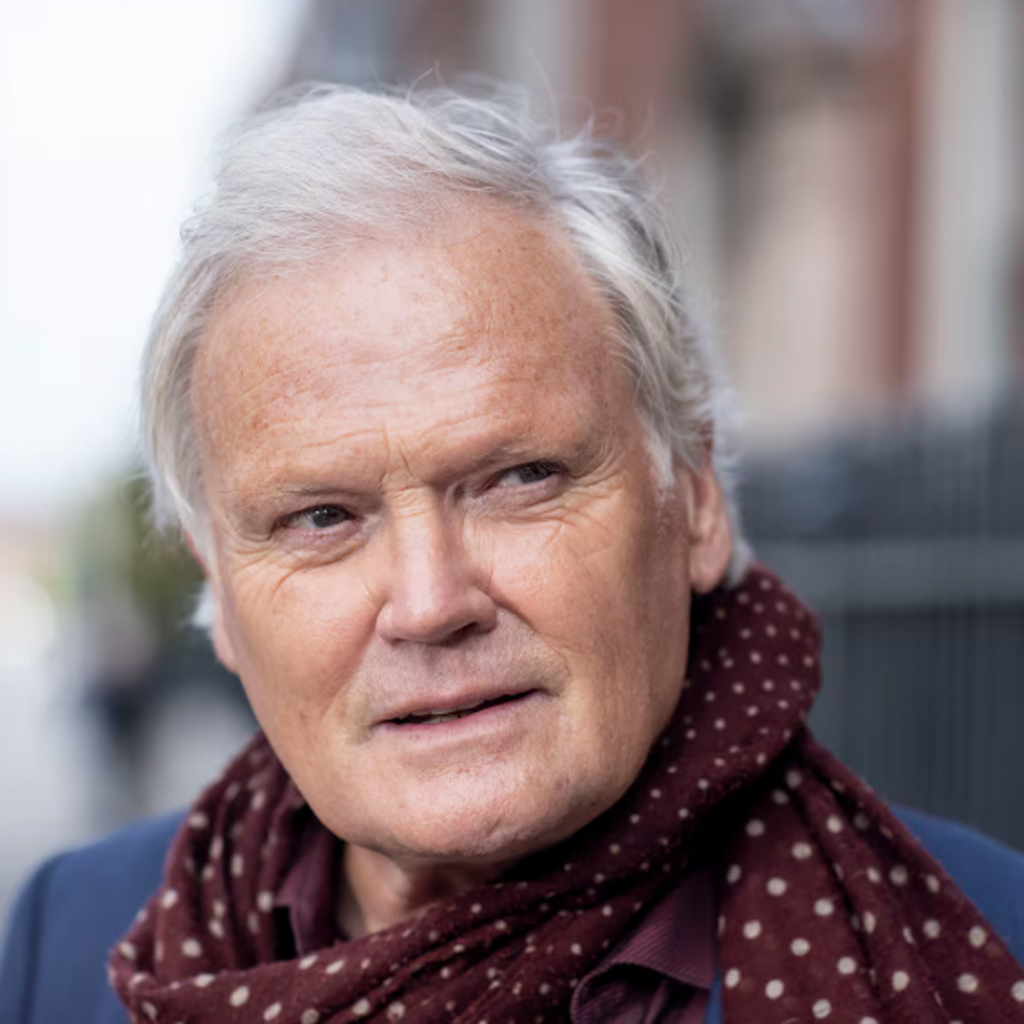
The annual Dermot Lane Seminar, in honour of theologian Dermot Lane, PP Emeritus of Balally Parish, will take place on Saturday 03 October 2026 from 10 am to 1 pm. The guest speaker, Dr Tony Bates, is a renowned clinical psychologist, writer, and national mental health leader with over four decades of experience in clinical practice,
Dr Bates will address the theme Awakening the Heart from a contemplative and a psychological perspective. For further information email cinziaangius@balallyparish.ie
Tony is the founder and former CEO of Jigsaw – The National Centre for Youth Mental Health. He was co-editor of Ireland’s National Mental Health Policy ‘A Vision for Change‘, and pioneer of psychotherapy and mindfulness-based interventions. He is also the author of three best selling self-help books on depression, trauma, and mental health care

Present by Rosemerry Wahtola Trommer
I open the moment as if it were a box
and, shocked by the cruelty I find,
I want to close the lid.
Want to pretend I don’t see the tears,
don’t hear children screaming.
I want to not feel my own heart whacking
like a club inside my chest.
In the myth, Pandora closes the lid
on hope and keeps it locked in.
But more than I want to close the box,
I want to keep it open.
I want to stay with the ache.
I want to be with what is real.
What is real: I keep the box open.
What is real: There is no box.
What is real: Sometimes I fear
there is no hope left. And sometimes
when I am very still with what is,
hope flutters inside me. How?
I don’t know. But its small wings
open like prayer inside my breath.
Reflection by Noel Keating:
Our poem from Rosemerry Trommer, ironically called ‘Present’ captures the pain of simply being alive in a wounded and troubled world. The story of Pandora’s box is a classic Greek myth which serves as an origin story for human suffering, while also explaining the enduring presence of hope. According to the myth, Zeus, the king of the gods, created Pandora as the first mortal woman and sent her to Earth with a sealed jar (or box) and gave her one strict command: she must never open it under any circumstances. However, her curiosity eventually overwhelmed her and she cracked the lid open to take a peek. Instantly, a chaotic swarm of terrible spirits representing evils never before experienced by humanity – flew out. These included disease and sickness, sorrow and despair, greed, envy, and malice as well as hardship, toil, and death. Terrified, Pandora slammed the lid shut but the evils had already escaped. Just one single entity remained trapped at the very bottom of the box: Elpis, the spirit of Hope. Because of this humanity retained hope to help them endure the darkness she had unleashed on the world.
Our poet imagines that every present moment as a box containing all the grief and suffering of our time. Her instinct – and ours – is to snap the moment closed so we don’t have to bear the suffering: to pretend I don’t see the tears,/ don’t hear children screaming./ I want to not feel my own heart whacking/ like a club inside my chest. That instinct, to close the lid on the suffering we witness in the news and on all kinds of media is an understandable defence mechanism. But our poet makes the difficult choice to keep the box open, to stay with the ache/ to be with what is real, challenging us to do likewise.
We know from personal experience that every time we sit down to meditate our minds seek a way out of the uncomfortable present; we want to close the lid on our own restlessness and the suffering of the world. The ego naturally recoils from such raw vulnerability. But our meditation practice teaches us to say with what is real. In the discipline of contemplative practice, we sit not to escape reality, but to root ourselves in it completely. And we come to know, as our poet says: What is real: There is no box.
Meditation teaches us that the boundaries the ego constructs to compartmentalize our inner lives from our outer realities are ultimately illusions. We come to know in our bones that we inter-are and that we are called to respond with compassion to the suffering of others.
Meditation shifts the centre of gravity of our consciousness from the head to the heart. Our practice of sitting in stillness and silence broadens our perspective. As John Main observed: Only when we have begun to turn from self-interest and self-consciousness does this larger perspective begin to open… into the depth and significance of things. Our practice does not promise an immediate solution or feelings of blissful peace; it promises the truth of what is, the knowledge of who we are in God and who God is in us – and that generates hope within us. As Trommer says: And sometimes / when I am very still with what is, / hope flutters inside me. How? / I don’t know. But its small wings / open like prayer inside my breath.
By continually returning to our mantra, we cultivate the stillness required to perceive this subtle inner movement. We do not manufacture the hope; we simply become still enough to feel its wings opening within our own breath. In the silent rhythm of the mantra the ache of the world and the presence of divine hope are held together. As St Paul writes: The ground of our hope’ … is … the love of God flooding our inmost hearts through the Holy Spirit He has given us. (Rom. 5.5).

