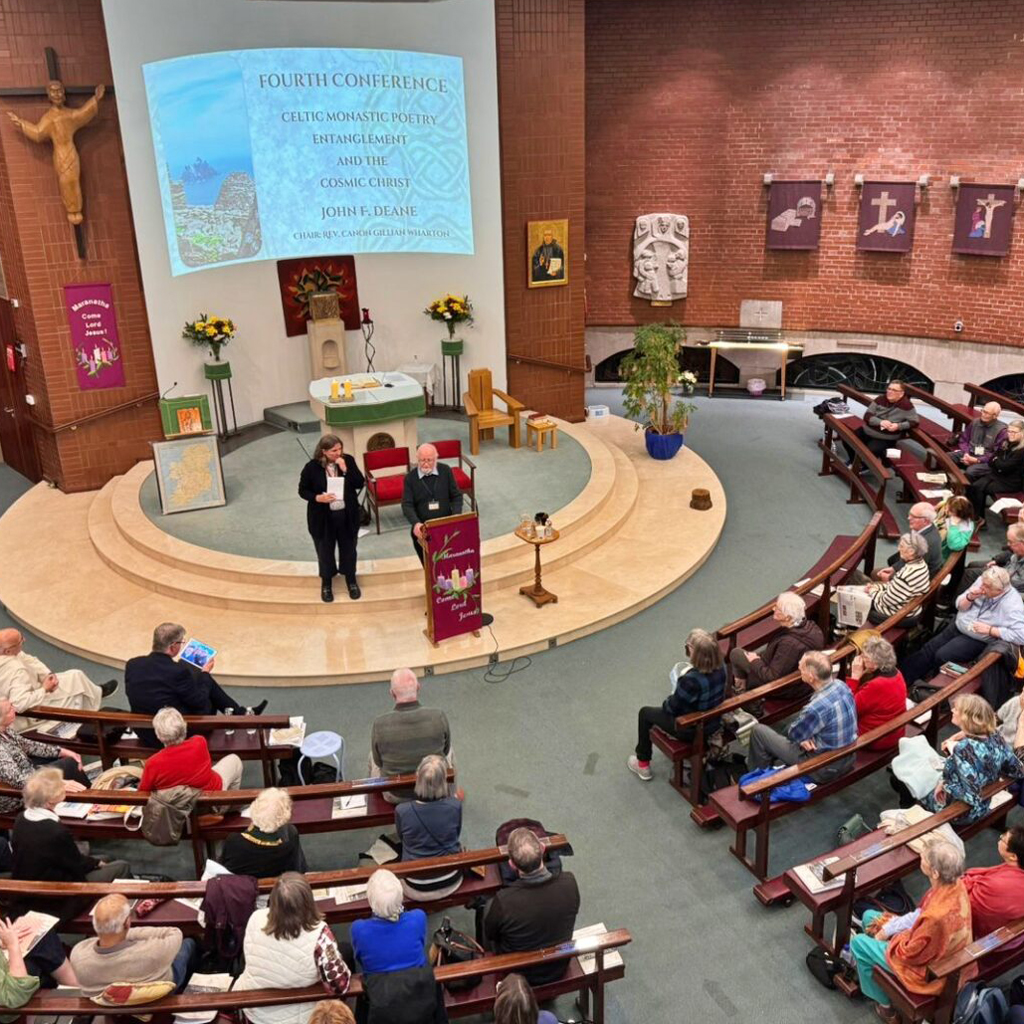
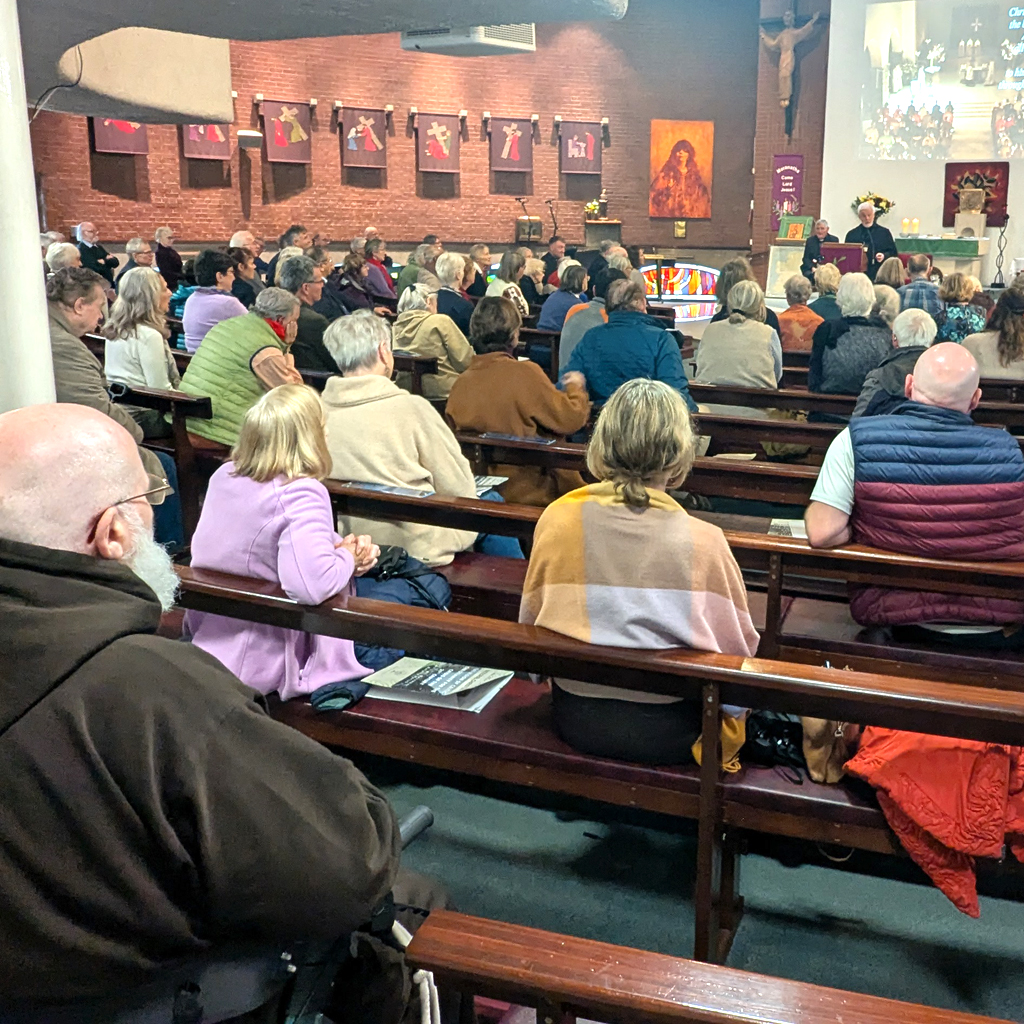
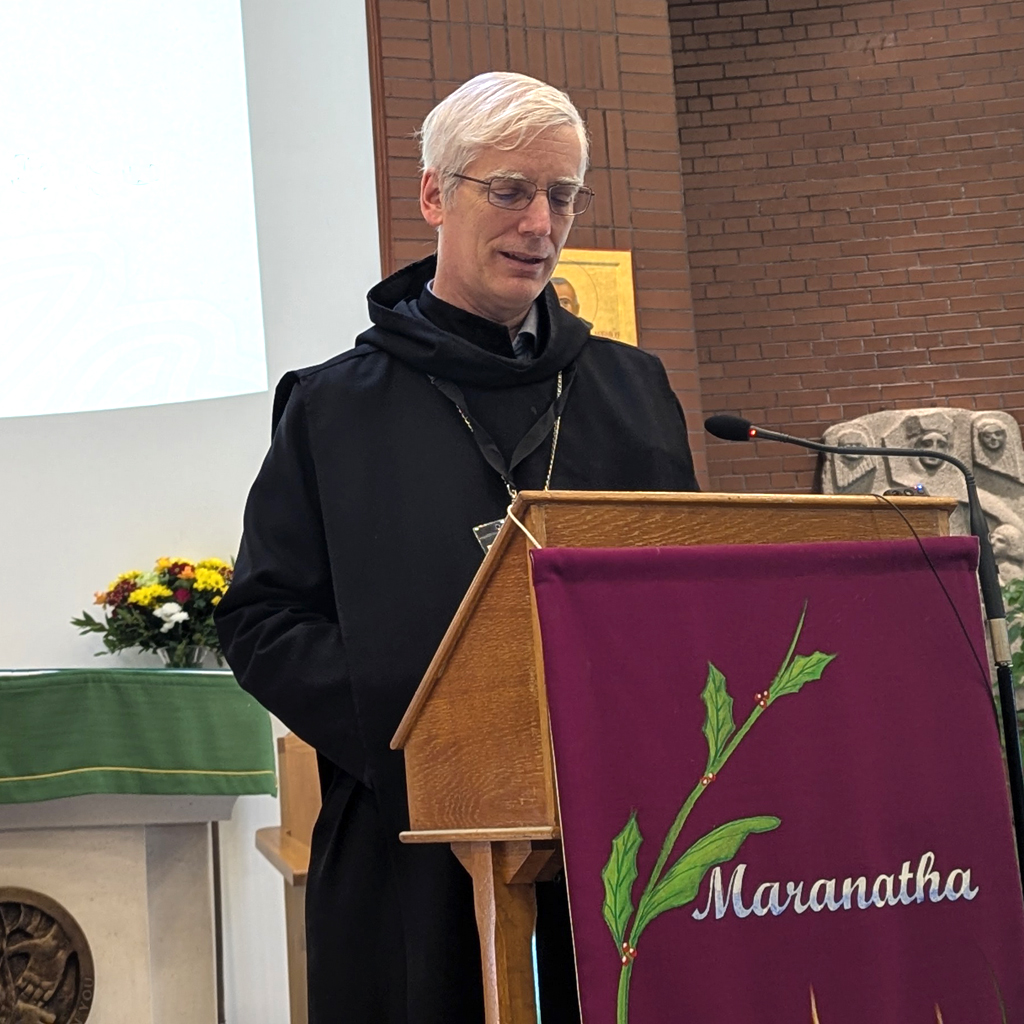
The John Main Seminar 2025, which took place in Balally parish in Dublin, from 6-9 November was a most interesting, contemplative and stimulating event. The seminar explored how the vision of Celtic Christianity might inspire and inform the development of Christianity today, in the crisis of the 21st Century. The first day, Thursday, 6 November, was a retreat day facilitated by Abbot Columba of Glenstal Abbey. At the start of the day he offered a short reflection on silence which he described as a slow, gentle caress which leads us to a deeper sense of Presence which holds us ever so gently. Our faithful repetition of a mantra expresses our intention to be available to God and receptive to God’s presence. It symbolises our desire to let nothing come between us and God. He advised us that when we enter our inner room we should close the door firmly behind us to keep our thoughts and emotions at bay. However, he reminded us that all hell can break loose in silence but that such noise is merely a temporary weather front that will move away soon. Just as Peter had to keep his eyes fixed firmly on Jesus as he walked on the waves towards Him, we too need to keep our attention focused on our mantra as a symbol of keeping our gaze fixed on God. Later in the day he led us in a practice of Lectio Divina.
In the afternoon, Dr Barry White spoke on the theme of meditation and healing. His talk was informed by two quotes from the Bhagavad Gita: (1) Seek refuge in the attitude of detachment and you will amass the wealth of spiritual awareness. The one who is motivated only by the desire for the fruits of his action, and anxious about the results, is miserable indeed’ (BG 2.49). and (2) ‘Those who consciousness is unified abandon all attachment to the results of action and attain supreme peace. But those whose desires are fragmented, who are selfishly attached to the results of their work, are bound in everything they do‘ (BG 5.12). Exploring the World Health Organisation’s definition of health, he concluded that true health requires a fundamental shift in our level of awareness, in our consciousness, which can be achieved through the practice of self-less attention in all aspects of our lives. Meditation is a practice which develops our capacity for pure attention; it draws us away from a fixation on continual doing and allows us to dwell in pure being. When doing is primary in our lives the result is ill health; when being is primary, our doing is informed by our deepest sense of being and the quality our doing is more authentic. Barry concluded by suggesting that we need three contemplative tools in our lives: (1) Meditation (2) practices that can draw us away from egoic desires and (3) a contemplative teacher in whom we can place our trust.
On Thursday evening, Fr Laurence Freeman OSB gave the first conference of the seminar. He reminded us that Christianity is essentially about integration, not replacement and suggested that ‘Celtic Christianity should therefore intrigue and excite us as 21st century Christians because we have, in many ways, become exhausted by a reputation, a profile of exclusion, of intolerance and polarisation rather than of acceptance, integration, and unity.’ In Celtic Christianity, we can see a way, albeit inevitably imperfect, in which it is possible to live the teachings of Jesus with depth and vitality. He hoped our seminar would be a collective act of imagination and encounter in faith, informed and sustained by imagination and humble self-examination. The literary, artistic and spiritual legacy that they left us speaks of their intense faith in Christ and a vision of the world as creation, not just an environment, but creation, everywhere revealing the presence of the Creator. This can help us see our life and the Christian revelation itself as something ever fresh and more life enhancing, more wonderful, rich, mysterious and meaningful than most people have become used to seeing it.
Referring to the spiral triskelions of Newgrange and the beautiful and intricate art of the Book of Kells and the Book of Durrow, Laurence observed that such works of beauty stimulate and energise us and unite spirituality and art; and this lies at the heart of the Celtic tradition and of Celtic Christianity. He observed that ‘It restores us even momentarily to what we have lost connection with. We may not immediately understand that we are touching or being touched by something that we have forgotten. … By paying single minded attention to these testimonies from the past we may awaken a sense of belonging where before we just felt a dull ache.’ Without romanticising the Celtic age or becoming nostalgic for an imagined idealised past, we can nonetheless In our disenchanted age we look back to an age of enchantment of those centuries and be awakened to a new kind of enchantment. The experience of the Celtic monk can be encountered through the poetry, theology and art that Christian faith took for them. For us it can be a catalyst in the process of reconnecting to the wonder of our own being as the psalmist says and the wonder of God. Perhaps the humility and down-to-earthness of Celtic Christianity and its monastic paradigm is why it avoided the triumphalist hierarchy of the continental church, based as it was, and still is today, on diocesan structures. The monastic model may have had its weaknesses, but it permitted greater flexibility and a softer expression of church life and vocation. from the 5th to the 12th centuries, Celtic monasticism was made up, of course, of the familiar elements of prayer, work, and study, communal prayer, and personal contemplation, but in a much less standardised or institutionalised way. Manual work of both Benedictine and Celtic monasteries included copying and illumination of books, as well as digging the fields, but it was taken to the highest level in the Celtic tradition.
Laurence observed that Celtic monastic settlements were built in concentric circles and that accommodated ascetics in the inner enclosure as well as married couples and their children – all considered to be monks, as well as a variety of domestic animals. It would seem that they were all living together in harmony, facilitating an interchange of ministries and levels of spirituality. Compared with what we might call later monastic exclusivity, where the cloister was designed to keep the world out, there was, in the Celtic setting, a softer distinction between monastic and secular communities. Monasticism, of course, originally was a lay movement, not clerical. Likewise, Celtic monasticism seems to have been more respectful of the female monastic than on the continental norm. Laurence noted that we see something of this in the new monasticism movements of our time, including our own experiment at Bonnevaux.
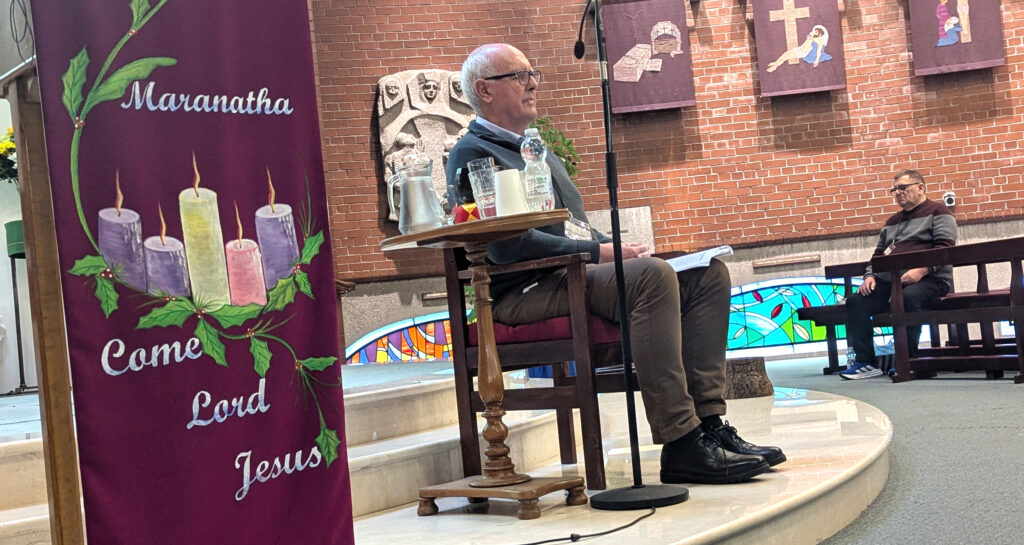
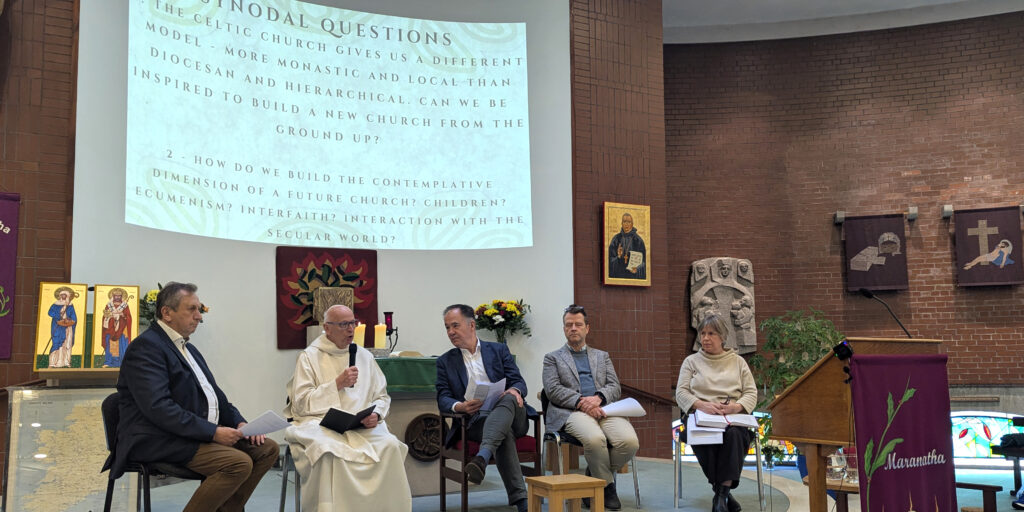
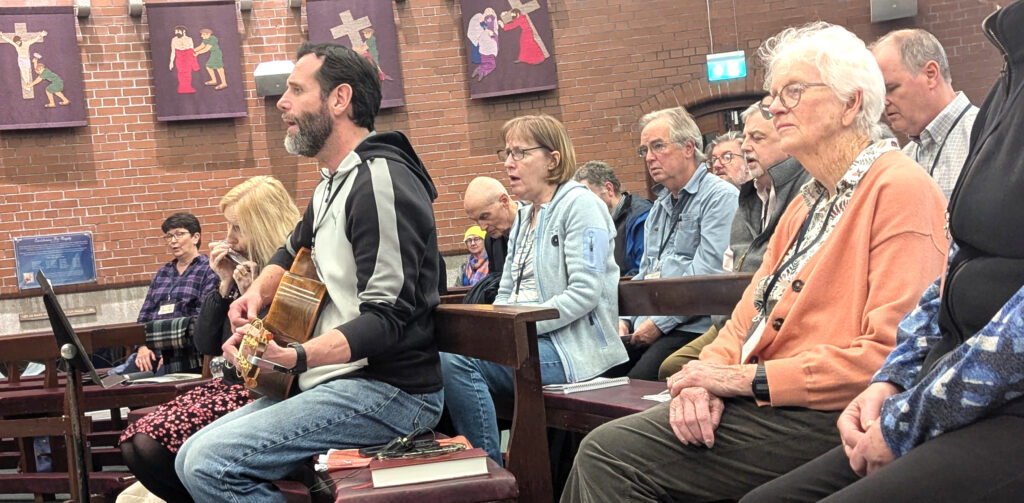
A prominent common element in this Christian environment and a goal to which everyone was expected to aspire was holiness. Laurence suggested it was this thirst, the insatiable thirst for holiness and for a deeper awareness of the ever-present presence of God, that draws us to Celtic spirituality. Laurence’s commitment to his ministry was inspired by the deep desire for holiness, which he noted he had not yet attained! But, as Thomas Merton said, it is the desire itself is what matters for us and for the life and health of the Church which we seek to renew. Noting that because our modern worldview is so different we can never authentically belong in the enchanted world of our ancestors as they did. While Celtic Christianity cannot become a refuge for us, it can inspire us in our disenchanted state, provided that we develop not nostalgia, but a critical new consciousness, a second naivety, a new innocence. The philosopher Paul Ricoeur coined this phrase, a second naivety, to describe a more mature post-critical faith which is expanded and takes us beyond literal belief and superstition, without discarding all the forms of the past. This is a new consciousness, a new way of seeing, and a new way of belonging to the world that is appropriate to our own time and situation. It also changes the way we read sacred texts, which have become meaningless to vast swathes of the population. The attention and the insight needed for this kind of reading, as Fr Columba was helping us to discover, are associated with the right hemisphere of the brain, which has long been suppressed by the domination of the left hemisphere, the prince of disenchantment, which handles the tools of logic analysis and system building. In our time we are experiencing a fundamental disconnection between the Church and the surrounding culture, and between the Church and its own members. The holiness of the 21st century must be what Simone Weil prophetically, tantalisingly, called a new sanctity, a new holiness.
If our understanding and insight into Celtic Christianity can give us an understanding of what Simone Weil means by a new holiness, that is very revolutionary. John Main saw that contemplation in every kind of human society is essential for civilisation. Contemplative consciousness does not come without contemplative practice. He taught that meditation, the most direct and universal practice, restores what has been lost in a new way. We lose spiritual vision when we lose the experience of connection. By healing this spiritual blindness, the powerful symbolism of sacraments and sacred texts emerge from legalism and mechanical routines. They are rehabilitated into the warm flow of human daily existence. So the solution to the present crisis facing Christianity, perhaps all religion, is not to replicate the forms and language of the Celtic Church or any other example of the past. It is to rediscover the genuine source of the Christian Celt’s joy, wonder and selfless attention. And that source is universal and timeless, and that source is contemplation. Contemplative consciousness is the medium of the mind of Christ. It is a blend of solitude, silence and simplicity and service, which are all fruits of contemplative practice.
Ancient tradition speaks of an eternal flame being lit in Kildare, where 1600 years ago St Brigid founded a monastery for men and women, which we will visit tomorrow. The fire that she adopted as the light of Christ. So let us take the inspiration of that light with us through this seminar, through these coming days, and when we come to return to our homes.
, which can be viewed hereThe seminar was enriched by a range of other presentations. Br Colmán from Glenstal Abbey spoke on the theme ‘The Book of Kells and the Myth of a Monastic Golden Age.’ His talk was illustrated with images from the Book of Kells – ‘a work of beauty in imperfection‘ and artifacts such as the Ardagh Chalice and was delivered with great good humour and intelligence. Professor Jane Williams spoke about ‘The Interplay between Power and Mission in the Celtic Tradition‘, and began by encouraging us to explore our understanding of mission.
The Irish poet, John F. Deane address the theme ‘Celtic Monastic Poetry, Entanglement and the Cosmic Christ‘ and gave a heartfelt and profoundly contemplative talk, which can be viewed by clicking here. He stressed he finds his inspiration in the silence and that he would not describe himself as a poet until his second-last breath. He spoke of the continuity between Celtic poetry and contemporary, contemplative poetry where the same Presence informs them both; that Presence which is captured beautifully in this excerpt from his poem ‘Toward Verse‘:
The valley lies still in the profound green
of late-summer fullness. Scarcely a breath
on the air. Little expectancy. But the spirit
holds. There is much trouble in the world
but no diminution of hope, though the spring
acclamations of birdsong have been falling
silent.
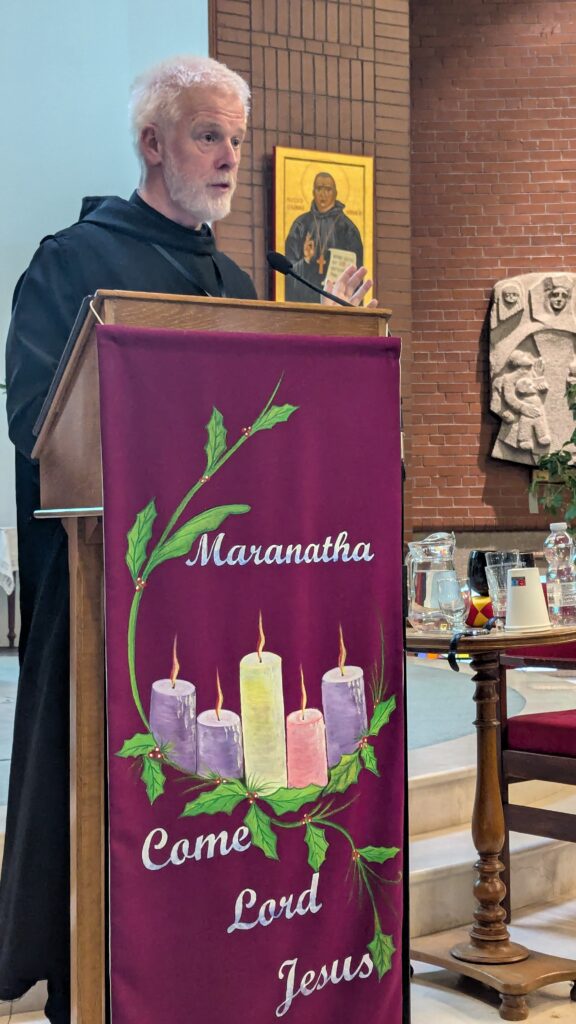
Retreats at Bonnevaux in early 2026: There are still some places available on the following retreats in January and February 2026 at Bonnevaux
Aimed at experienced meditators, this intensive retreat provides an opportunity for sustained silence over an extended period.
Led by Liz Watson it will draw wisdom from biblical stories such as that of Jonah and the whale. The retreat will run from 17-26 Jan 2026 – click here for further details and to register.
Aimed at beginners and less experienced meditators, this gentle retreat will be led by Fr Laurence Freeman OSB and will run from 03-08 February 2026.
The series builds a universal insight into meditation while also reconnecting with the Christian contemplative tradition – click here for further information.
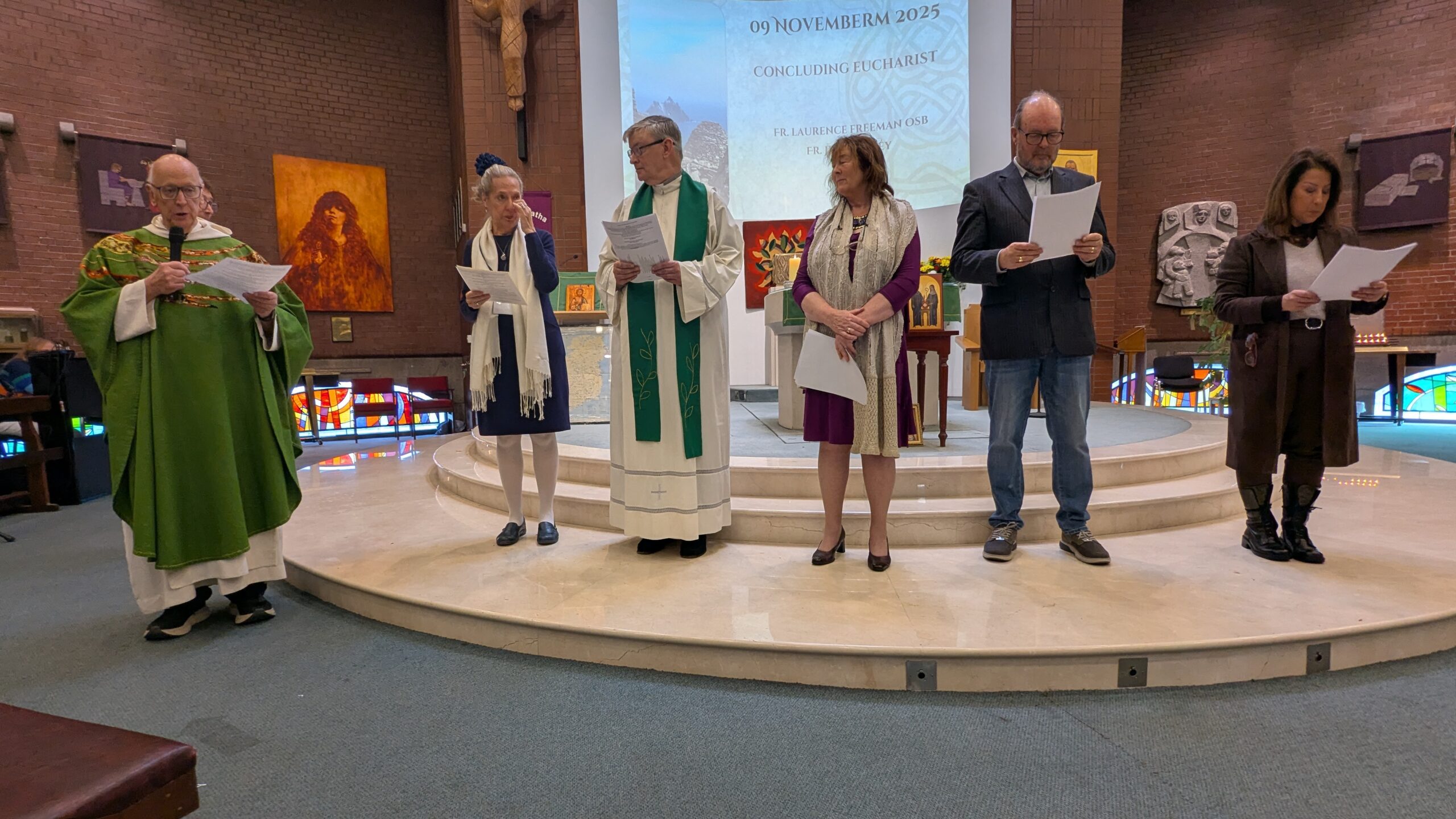
On Saturday morning the John Main Seminar 2025 was devoted to a synodal-type reflection on how the themes of the seminar might be applied to our community and to the wider Church. And, on Saturday afternoon, Fr Jim Caffrey (PP Balally Parish) and Cinzia Angius (Pastoral Leader Balally Parish) gave an account of the journey of the parish as it strives to become a pcontemplative parish without walls.
The Seminar concluded on Sunday morning with a contemplative Eucharist, celebrated by Fr Laurence and Fr Jim Caffrey PP, Balally Parish. At that ceremony, four Irish people made their final oblation as Oblates of the World Community for Christian Meditation. They were Fr Jim Caffrey, Rosaleen Fadden, Bernard McDonald and Cinzia Angius. In addition, an American Oblate transferred her commitment to the WCCM community. Huge credit must go to Cinzia Angius, chief organiser of the seminar and to the parishioners of Balally Parish for their great hospitality and work.
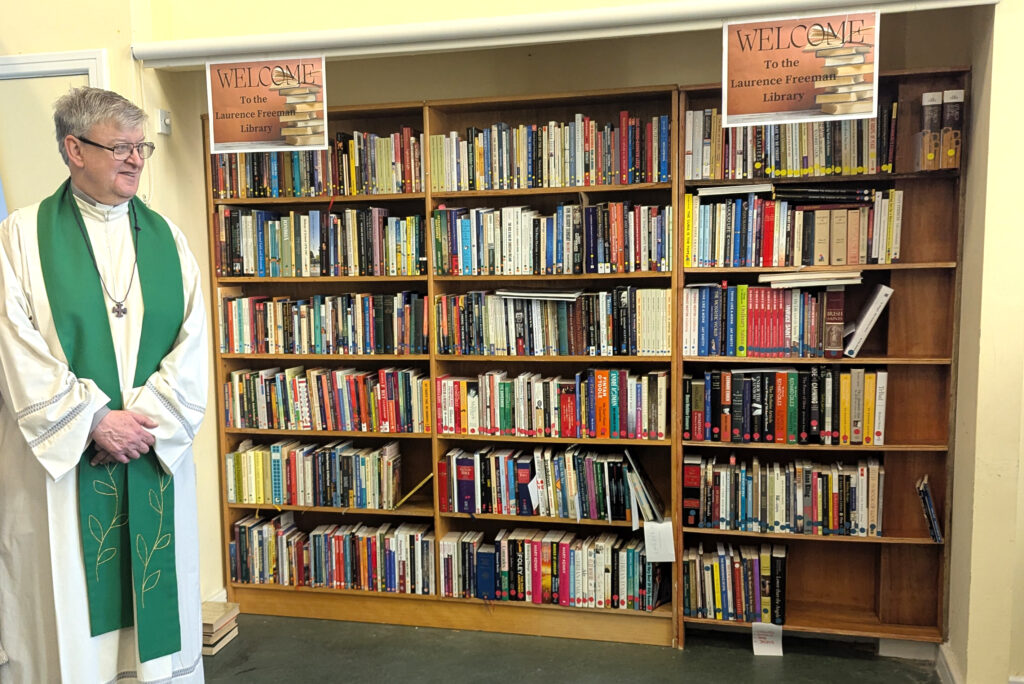
Fr Jim Caffrey at the blessing of the new Fr Laurence Freeman Library