


On Sunday, 17 May 2026, the Feast of the Ascension, RTE will do a live broadcast of a Contemplative Eucharist from Balally Parish Church.
Fr Jim Caffrey will preside at the Mass and Fr Laurence Freman will deliver the sermon. Click here to join.
The Annual General Meeting of Christian Meditation Ireland will take place online on
Monday, 18th May 2026 at 8 pm
to facilitate the attendance of as many people as possible from the Irish community of meditators.
The meeting will take place over Zoom and you will be able to join in the event by clicking here. The directors will report on their work over the past year and the accounts will be presented for adoption.
While only those designated as ‘members’ – effectively the shareholders of Christian Meditation Ireland clg – will have a vote, the AGM is an opportunity for all to learn about the work of the community nationwide.
Balally parish in South Dublin continues its program on the Rule of St Benedict. The program runs once each month, on Saturday mornings from 3 pm to 7 pm – on the last Saturday of each month, with the exception of November (Sat 21 Nov) and December (Sat 12 Dec).
The program explores how ordinary men and women can strive to live the Benedictine Rule in the course of their everyday lives in the modern, busy world. For further information email cinzia.angius@balallyparish.ie

Fr Donagh O’Shea was again the guest speaker at the Cork branch of Christian Meditation Ireland. John Main described meditation as a practice of radical simplicity and Donagh observed that while it may be simple to be happy, it can be very difficult to be simple. As human beings we tend to complicate things. For example a child may say “I want to go and see Kanturk” and an adult responds by asking “Why do you want to see Kanturk?” and the child explains “Because I want to see the world”. The child’s wish is simple – for her to see one place is enough.
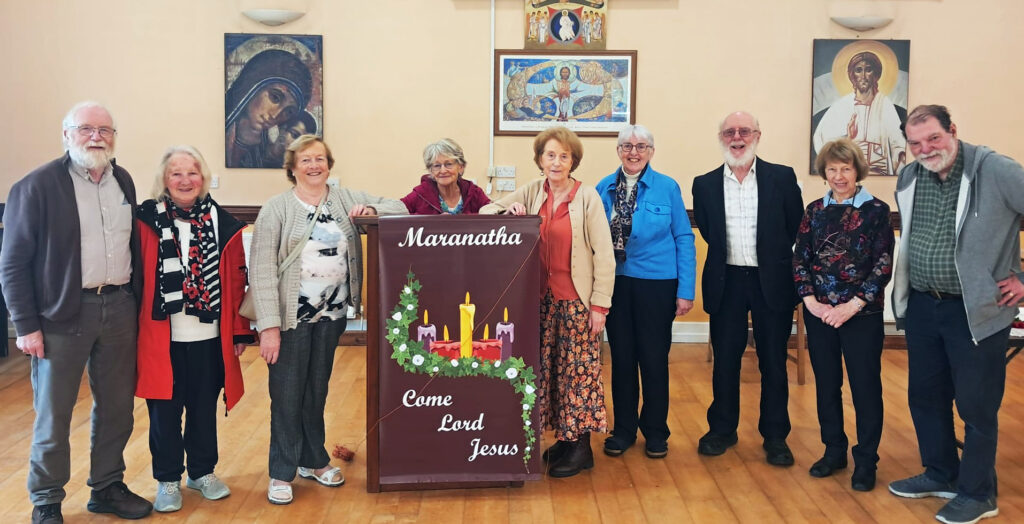
For us too the place where we are and the present day should be enough but we always tend to be on the lookout for something more. This happened to Jesus’ disciples after his Resurrection. Mary Magdalen thought Jesus was a gardener when she saw him beside the tomb because she expected him to be different. The disciples on the road to Emmaus didn’t recognise him until he broke bread with them because they could not imagine that he had risen as he said he would. Jesus had spoken simply to them of his death and resurrection but they had not understood.
Jesus speaks to us through the Scriptures so we should read them as slowly and meditatevely as possible as in Lectio Divina. And we should appreciate that they are not merely words addressed to his disciples two thousand years ago, but every time we read a sacred text we must read it as if it was being addressed to us, personally – addressing our own circumstances at this stage of our lives. Origen said that there are 30 stages on the way to a spiritual life but we don’t have to figure out how far we’ve come or how far we have to go before we can say “I’m here”. When we meditate the only place we need to be is right here, right now. God reaches us there.
Such Singing in the Wild Branches by Mary Oliver.
Reflection by Noel Keating
It was spring
and finally I heard him
among the first leaves—
then I saw him clutching the limb
in an island of shade
with his red-brown feathers
all trim and neat for the new year.
First, I stood still
and thought of nothing.
Then I began to listen.
Then I was filled with gladness—
and that’s when it happened,
when I seemed to float,
to be, myself, a wing or a tree—
and I began to understand
what the bird was saying,
and the sands in the glass
stopped
for a pure white moment
while gravity sprinkled upward
like rain, rising,
and in fact
it became difficult to tell just what it was that was singing—
it was the thrush for sure, but it seemed
not a single thrush, but himself, and all his brothers,
and also the trees around them,
as well as the gliding, long-tailed clouds
in the perfectly blue sky— all, all of them
were singing.
And, of course, yes, so it seemed,
so was I.
Such soft and solemn and perfect music doesn’t last
for more than a few moments.
It’s one of those magical places wise people
like to talk about.
One of the things they say about it, that is true,
is that, once you’ve been there,
you’re there forever.
Listen, everyone has a chance.
Is it spring, is it morning?
Are there trees near you,
and does your own soul need comforting?
Quick, then— open the door and fly on your heavy feet; the song
may already be drifting away.
This poem is a classic example of Oliver’s ability to find and then describe with poetic precision moments of enlightenment in nature, where the boundary between the observer and the observed evaporates.
The poem describes an encounter with a thrush in the spring, where the speaker feels a sudden, ecstatic dissolution of the self, as she sensed ‘I seemed to float,/ to be, myself, a wing or a tree.’
The third verse of the poem, which describes the scene with great clarity, might also be said to describe our experience of meditation – how the repetition of the mantra brings us to a state of consciousness beyond self-reflective consciousness: First, I stood still/ and thought of nothing./ Then I began to listen./ Then I was filled with gladness – and that’s when it happened,/ when I seemed to float,/ to be, myself, a wing or a tree – and I began to understand/ what the bird was saying.
Oliver describes her experience as a pure white moment in which the sands in the glass stopped and gravity sprinkled upward. And it seemed as if all of nature was merged as one, because while it was the thrush for sure, but it seemed/ not a single thrush, but himself, and all his brothers,/ and also the trees around them,/ as well as the gliding, long-tailed clouds/ … all, all of them/ were singing./ And, of course, yes, so it seemed,/ so was I.
While as meditators we may rarely, if ever, have such a pure white moment, our practice does teach us the same truth in the depth of our hearts over time: Such soft and solemn and perfect music doesn’t last/ for more than a few moments. But what is equally true is that, once you’ve been there, you’re there forever. As Rosemerry Trommer says in one of her poems, describing a walk through a forest alive with blossoms, hours later the scent is long gone, but I can’t unknow how sweet it is. Our practice of silent meditation – much like Oliver’s walks – conditions us to recognize the singing even when we are not sitting in silence.
Just as Oliver follows the sound into the thicket, when we meditate we follow the sound of the mantra as it leads us into the silence of deep mind, the silence of the heart where, like Oliver, we find we have ceased thinking and revel in the experience of simply being. The illusion of separation dissolves as the self-reflective ‘I’ that is meditating disappears; there is no longer a person repeating a word; just pure awareness of Presence. As our poet describes, the sense of participation in the singing happens only when we stop trying to capture it. She doesn’t catch the bird; instead she simply allows its manifestation of being to wash over her until she is no longer separate from it but a silent participant in it.
Through our faithfulness to our practice we discover the reality of who we are in the depths of our being, how we inter-are, intimately connected with each other and all of creation because we are already one in God.
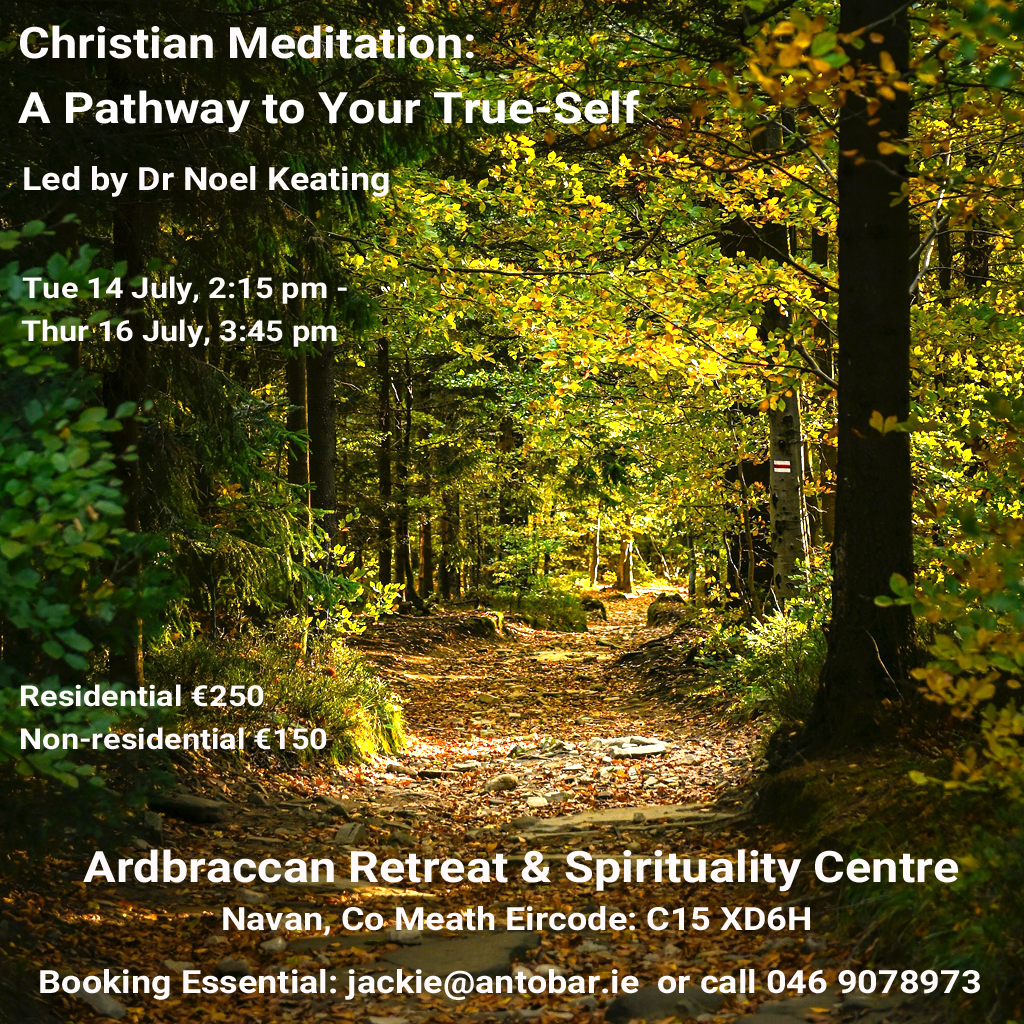
Noel Keating will lead a retreat on Christian Meditation: A Pathway to Your True-Self from Tuesday 14 July (starting at 2;15 pm) to Thursday 16 July (ending at 3:45 pm). The venue will be the at the Spiritan Retreat and Spirituality Centre in Ardbraccan, Navan, C15 XD6H.
Noel, who was National Coordinator for Christian Meditation Ireland for ten years, will use a combination of contemporary contemplative poetry and scripture readings as a way into silence and receptivity. We will discover how the contemplative journey- from the head to the heart – restores harmony between the egoic-self and the true-self, as we discover who we are in the depths of our being.
The retreat will balance teaching, meditation together, time for quiet and opportunities for sharing. While suitable for beginners, this event will enable experienced meditators to deepen their experience of the practice. It will also include an introduction to the practice of lectio divina.

