


WCCM is an international community of meditators in the Christian tradition, inspired by the work of John Main and Laurence Freeman. It is a community, not an organisation but like any community it needs the support of its members in order to sustain itself so that it can fulfil its mission which is ‘To communicate and nurture meditation as passed on through the teaching of John Main in the Christian tradition in the spirit of serving the unity of all.‘
In over 100 countries across the world, WCCM carries out its work through the commitment of dedicated volunteers who are inspired by that mission. Every country has its own leadership team which supports and is supported by the world-wide community. Other volunteers take on various international roles and there is a small group of paid, skilled workers who carry out specific tasks to support the mission. WCCM provides a range of resources including the WCCM website which contains a wide range of practical supports and resources. Each year, in June, WCCM invites meditators to make a small financial contribution to support this work. That appeal is LIVE now. Please click on the image to the right and consider making a donation this week. You can download a letter from Laurence Freeman about the appeal by clicking here.
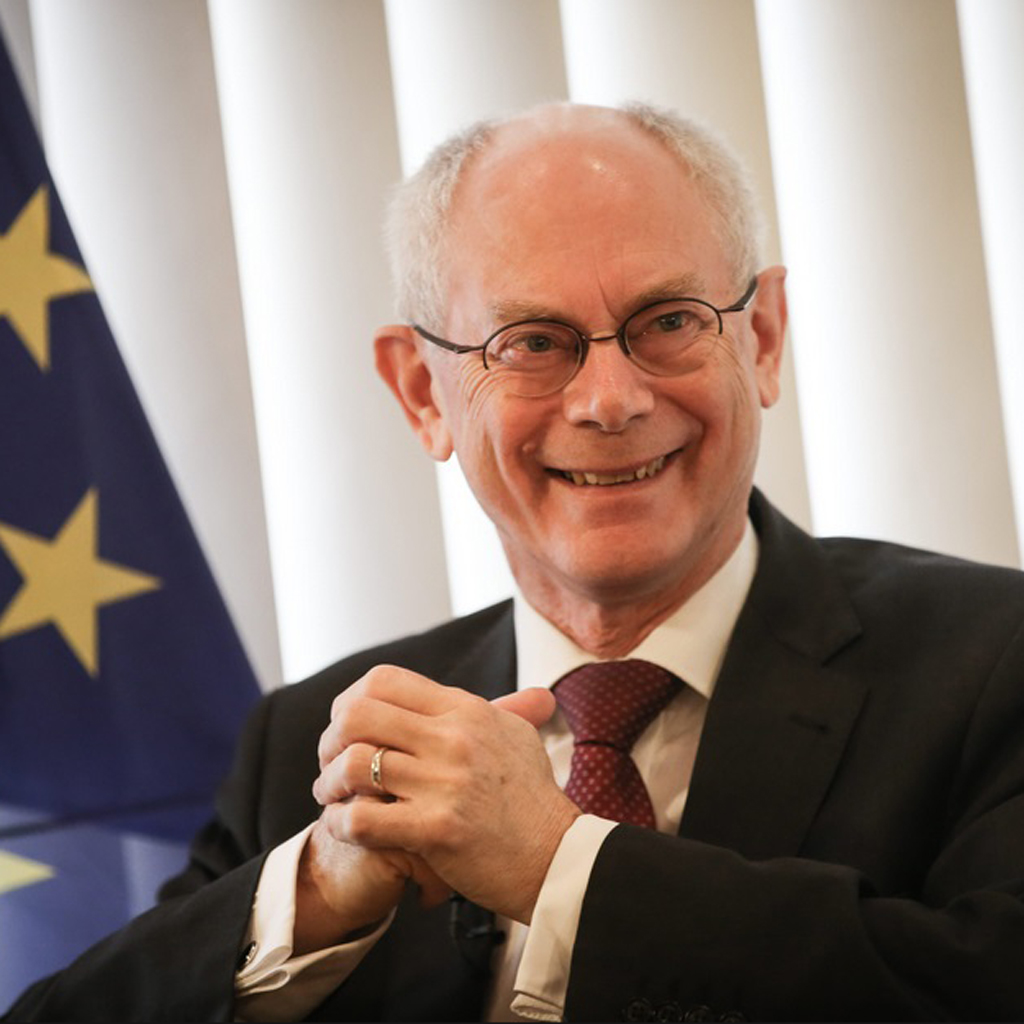
Herman von Rompuy, former Prime Minister of Belgium and former President of the European Council) gave an inspiring talk to invited guests in Balally on Friday, 31 May 2024 at 7:30 pm. The title of his talk was Meditation Supporting Democracy.
He was launching an initiative in Balally Parish called The School of Contemplation which will comprise a series of talks on aspects of contemplative leadership in Church and society over the coming years. Future speakers will include Mary Robinson and Bertie Ahearn – details will be announced in future newsletters.
In his talk, Herman explored how the practice of meditation can be a countervailing power against negativity and polarisation and an amplifier of positivity because our daily practice interrupts the cycle of incessant doing that dominates our approach to modern life in the Western world.
Meditation attends to the the realm of being and can impact our doing because the egoic self is no longer at the centre. Our practice reveals layers within us and draws us to discover our true-self and to live life from that perspective. It creates space for empathy and compassion and emphasises togetherness as opposed to individualism. In short it makes us other-centred; it is a solitary activity that can lead mysteriously to solidarity.
Christian Meditation Ireland and Balally Parish are planning events for the coming year – you might like to take note of the dates for your diary!
Balally parish is organising a weekend of events in honour of Mgr Dermot Lane, theologian and Parish Priest Emeritus of the parish to celebrate his life and his writings which have been very influential over the past 60 years.
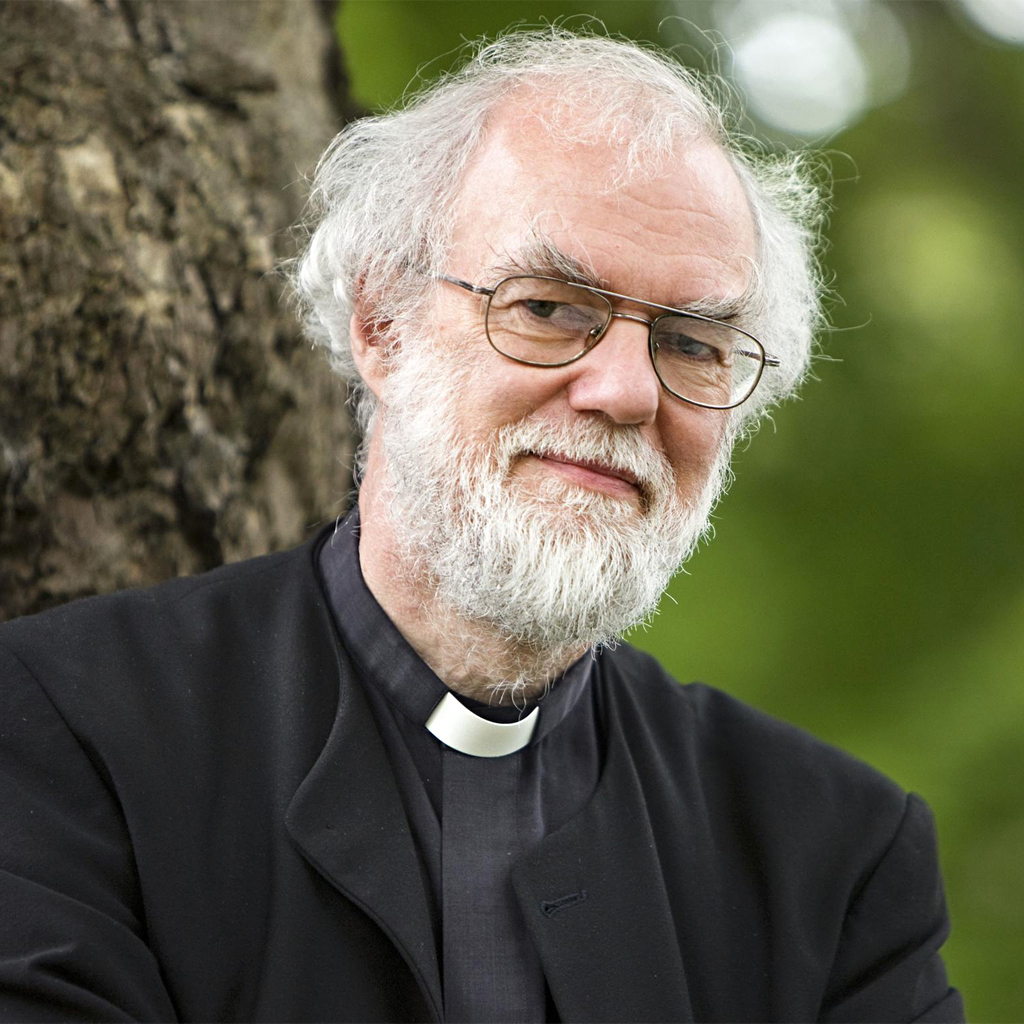
The weekend will comprise a series of talks by the former Archbishop of Canterbury, Rowan Williams, a fellow theologian and contemplative writer. This wonderful, inspiring occasion will take place on Saturday 28 September and Sunday 29 September 2024 and we urge you to put those dates in your diary straight away. We will publish the programme once it has been finalised in September.
Christian Meditation Ireland will host an morning of reflection and meditation on Saturday, 9 November 2024 with Fr Donagh O’Shea as our guest speaker. Running from 10 a.m. to 1 p.m. the theme of the day will be ‘Meditation: Falling Awake‘
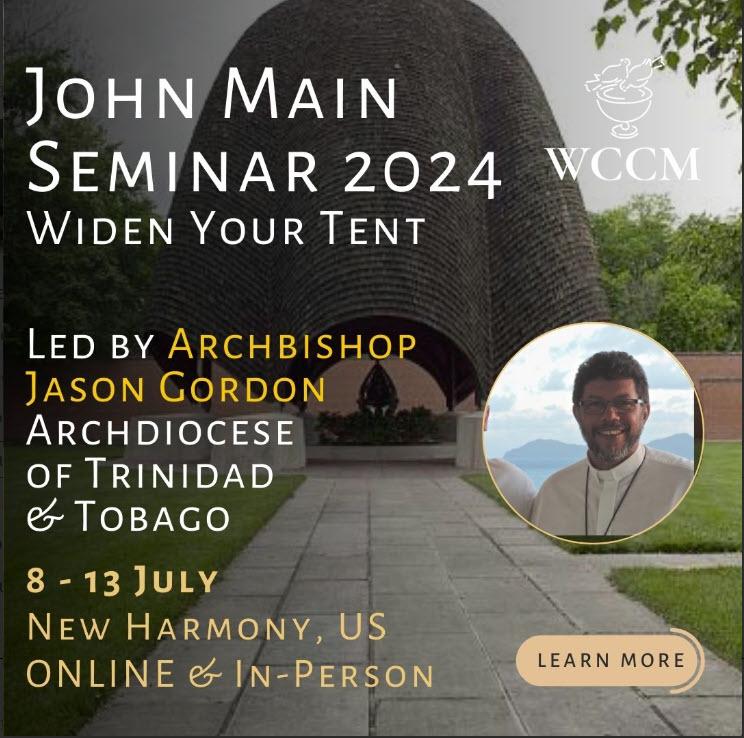
This year’s John Main Seminar will take place in New Harmony, Indiana in the United Sates. Running from 08-13 July 2024, it will be a hybrid event, both in-person and online. This annual event was established in honour of John Main and develop the influence of his teaching in dialogue with the modern world. You can find our more and register for this event – whether in-person or online – by clicking here or on the image to the left.
WCCM will run a contemplative retreat for young adults (aged 18-45) from all around the world from 30 July to 04 August 2024 in Bonnevaux, France. The theme for this year is ‘Where Has All The Joy Gone?: Reconnecting With Our True Selves‘. If you or a young person you know is interested in going, they can check it out by clicking here. Scholarships may be available
Original Sin by Rebecca del Rio
Not sex, not disobedience but
Deceit. The woman made me
Do it or, worse, self-deceit
Believing the woman made me do it.
We believe the lies
we tell to ourselves,
Tales to absolve or explain
But never own the moves
We make to place ourselves
In positions of invulnerability.
We move across the board, fighting
A war we inherited. A fight
That tells us there is only
Room for one at the end, at the top.
We believe ignorance
Is rewarded with absolution.
How hard, we find, to ask
How does deceit benefit me?
Hurt another?
How hard to own our nature
as fearful, small animals
clawless, but cunning.
How hard to see that
achieving the sought-after prize
can only begin with seeing ourselves
not the image, become genuine
Not the polished person
that deceit and ego wish us to be.
Reflection by Noel Keating: Take time to read the poem slowly, tasting the flavour, as it were, of each phrase. Then read it a second time, paying attention to any word or phrase that resonates with your heart.
In the Christian tradition, Original Sin is the teaching that all people inherit Adam’s sin and guilt at conception: we are born debilitated by Adam’s sin, whose fundamental nature is pride. I love how quickly this poem challenges that idea, getting to the heart of the matter in its opening lines. The poet suggests that the original sin is self-deceit, convincing myself that ‘The woman made me do it.’
In Moment of Christ, John Main writes: ‘I do not think it is any exaggeration to say that original sin is self-consciousness, the hyper-self-consciousness of egoism, because self-consciousness gives rise to divided consciousness. This is like having a mirror between God and ourselves. Every time we look into the mirror we see ourselves. The purpose of meditation is to smash that mirror so that we no longer look at reflections of things and consequently see everything backwards, including ourselves. . . . .The mirror must be smashed. And Jesus is talking about overcoming self-consciousness, the mirroring self, when he says no one can be a follower of his unless they leave self behind.’ The original sin, then, is not something committed by Adam and Eve but every day by ourselves when we lie to ourselves and then believe the lies we have told ourselves! However, there is nothing particularly original about it. We all do it, all the time!
Richard Rohr writes, in The Universal Christ, that ‘in one way, the doctrine of “original sin” was good and helpful in that it taught us not to be surprised at the frailty and woundedness that we all carry. Just as goodness is inherent and shared, so it seems with evil. And this is, in fact, a very merciful teaching. Knowledge of our shared wound ought to free us from the burden of unnecessary – and individual – guilt or shame, and help us to be forgiving and compassionate with ourselves and with one another.’
But he goes on to remind us that ‘yet historically, the teaching of original sin started us off on the wrong foot – with a no instead of a yes, with a mistrust instead of a trust. We have spent centuries trying to solve the “problem” that we’re told is at the heart of our humanity. But if you start with a problem, you tend to never get beyond that mind-set. … When we start with a theology of sin management administered by a too-often elite clergy, we end up with a schizophrenic religion. We end up with a Jesus who was merciful while on earth, but who punishes in the next world. Who forgives here but not later. God in this picture seems whimsical and untrustworthy even to the casual observer.’
Instead Rohr advocates that we attend to our inner motivation rather than merely on our outer behaviour. More importantly, that we should focus on our original goodness rather than original sin. He writes that ‘It is interesting that Jesus emphasized the absolute centrality of inner motivation and intention more than outer behaviour, spending almost half of the Sermon on the Mount on this subject (see Matthew 5:20–6:18). We must—yes, must—make a daily and even hourly choice to focus on the good, the true, and the beautiful.’
As the poet says ‘How hard [it is] to see that achieving the sought-after prize [which I consider to be living life with authenticity, true to our calling] can only begin with seeing ourselves –[our genuine, true selves] – not the image, not the polished person that deceit and ego wish us to be. Authentic spirituality is always first about you – about allowing your own heart and mind to be changed, allowing yourself to become what in truth you already are, by saying a conscious YES to God. As Jesus said: ‘Anyone who does the will of God, that person is my brother and sister and mother.’ [Mark 3:25]
This is why we meditate; to leave ourselves open and vulnerable to a graced encounter that awakens us to who we truly are in the depths of our being. It awakens us to the goodness that is already within and that changes completely our way of seeing, and hence our way of being, in the world. Only then can we begin to mirror the infinite goodness of God’s presence, allowing Her love to flow freely into the world where we live.

