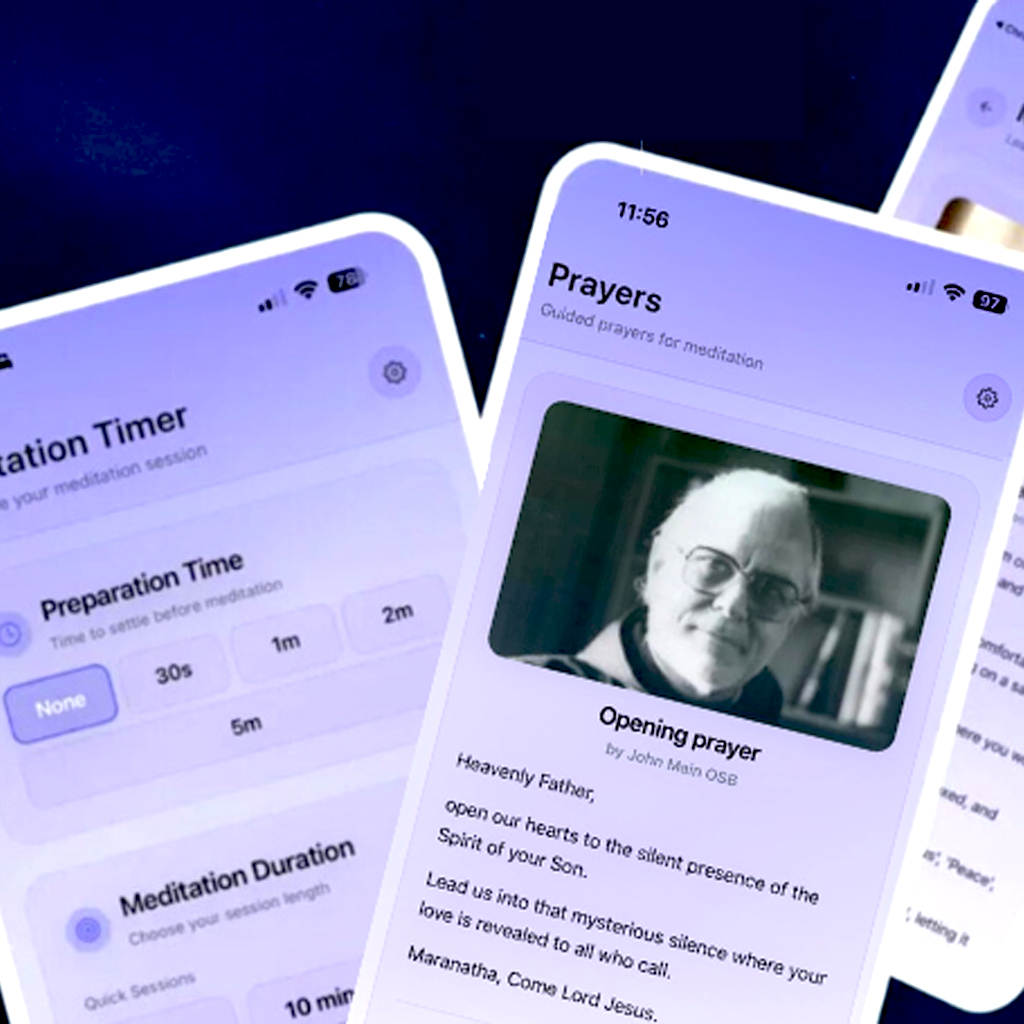
Silentium, the new meditation app from the World Community for Christian Meditation (WCCM), is now available for download for both iOS and Android devices. Rooted in the teachings of John Main and Laurence Freeman, Silentium supports a steady rhythm of meditation — helping you cultivate silence, stillness and simplicity.
The app is user friendly – it has a customizable meditation timer with a choice of bells and ambient soundscapes. It also gives access to daily reflections and readings from the WCCM community, as well as guided meditations and audio reflections in multiple languages. It can be used in offline mode for uninterrupted meditation anywhere. The app also gives easy access to other WCCM resources and global community events.
For those who want more, the app can also be set to give you personal reminders and to track your progress. And, if you wish it, it can give you AI-powered insights to support and deepen your practice.
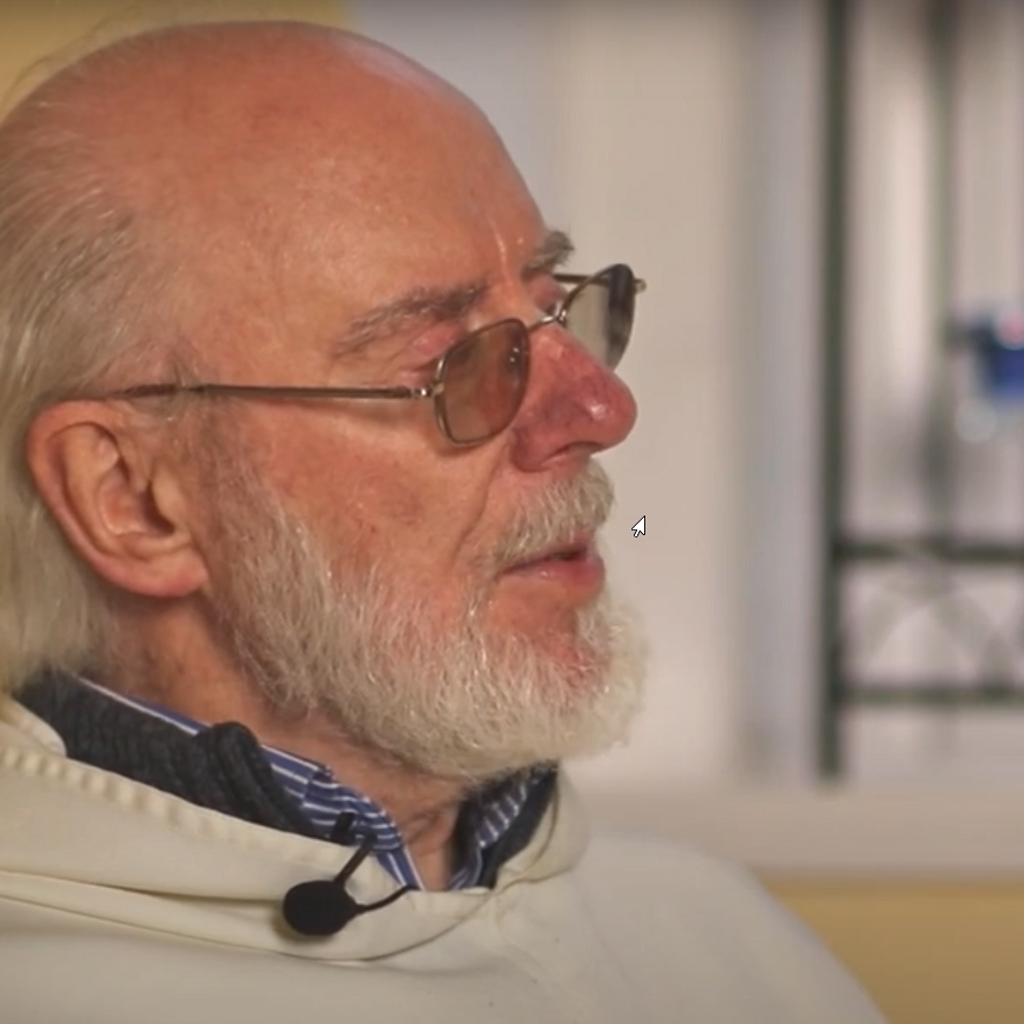
Mary O’Connor reports from Cork: We were delighted as usual to have Fr. Donagh with us in Cork recently on Saturday 22 November. The day began at 10 am and finished finishes with mass at 1.00 pm. That arrangement works very well as some people travel long distances to attend. We had 74 people in attendance and it’s always great to see many familiar faces as well as many new ones.
Fr. Donagh began by telling us that he wanted to talk to us about small things and especially about the kingdom of God in light of them. Normally we associate kingdoms with kings, crowns, jewels, inherited wealth and palaces but that is not what Jesus spoke of when he spoke about the kingdom of God. He spoke of mustard seeds which grow from being a tiny seed into a tall tree.
Jesus didn’t seek out important people to be his companions but humble fishermen. He spoke to the sick, the poor and children. Instead of living in a palace surrounded by luxury, he “often had nowhere to lay his head”. With such images, Fr. Donagh reminded us that small, seemingly unimportant things and people are closer to the kingdom of God than any of the material things which many people strive to attain. The present moment is just now – a small moment in time but we could do so much with it, if we could learn to simply BE.
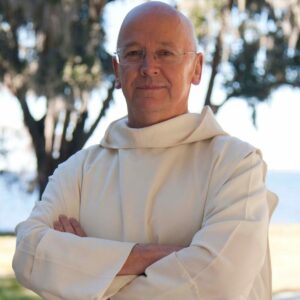
Fr Laurence Freeman OSB will run a retreat aimed at beginners and less experienced meditators. It will run from 03-08 February 2026. It will explore universal insights into meditation while also reconnecting with the Christian contemplative tradition – click here for further information or to register.
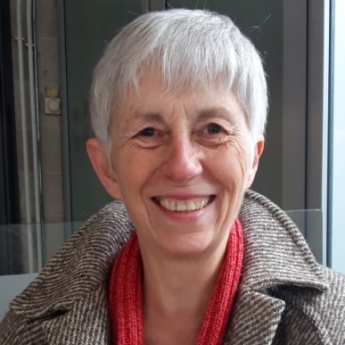
In January 2026 Liz Watson will lead a retreat at Bonnevaux aimed at experienced meditators. This intensive retreat will provide an opportunity for sustained silence over an extended period. Running from 17-26 Jan, it will draw on biblical stories such as Jonah and the whale – click here to register
Primary Wonder by Denise Levertov
Days pass when I forget the mystery.
Problems insoluble and problems offering
their own ignored solutions
jostle for my attention, they crowd its antechamber
along with a host of diversions, my courtiers, wearing
their coloured clothes; cap and bells.
And then
once more the quiet mystery
is present to me, the throng’s clamour
recedes: the mystery
that there is anything, anything at all,
let alone cosmos, joy, memory, everything,
rather than void: and that, O Lord,
Creator, Hallowed One, You still,
hour by hour sustain it.
from Selected Poems by Denise Levertov
Reflection by Noel Keating: The opening lines of Levertov’s poem describe that state when we become imprisoned by the egoic self – when we are preoccupied with our needs and wants and our desire for power, prestige and possessions. In such a state we look at every situation as an opportunity or a threat and we are driven to act in defence of the false-self. We fall into a state of distraction in which problems insoluble and problems offering their own ignored solutions jostle for my attention and we lose sight of who we truly are in the depths of our being. As Maggie Ross expresses it, in her book ‘Silence: A User’s Guide’, we ‘become disconnected from the wellspring of silence and stillness [within us] that is necessary for human beings to thrive.’ She goes on to say that ‘These living waters no longer animate the speech and activity of our minds and bodies, lost as we are in a wasteland of our own making.’
She warns that ‘if we are to remain human, if our lives are to have any meaning, if we are to continue as a viable species, it is essential that we restore the flow that enables our everyday lives to be informed by the riches found in silence’. She goes on to remind us that ‘yet the first step toward restoring the circulation between silence and speech is to make ourselves at home within the liminal spaciousness of our own minds, in the equipoise of attentive receptivity that opens the flow between these two aspects of knowing, that frees us from the strictures of time and the persecution of our own thoughts. To inhabit this balance, to have the wellspring of silence inhabit us, is the source of true happiness; there is security only in the apparent insecurity of this spacious silence.’
In the second-half of her poem, Levertov describes what it is like when once more the quiet mystery is present to me. When we enter that graced state the throng’s clamour recedes: the mystery that there is anything, anything at all, let alone cosmos, joy, memory, everything,
rather than void is revealed as pure gratitude. The undivided consciousness of this heart-knowledge shatters the illusion of our separation and reveals to us who we truly are in God and who God is in us. As Maggie Ross expresses it the ‘hidden passages to the deep mind become unblocked, enabling us to wait receptively, without striving, without expectation for this or that—the first step in restoring the natural flow between the direct knowledge of our core silence, and our always-interpreting self-conscious rationality.’
Levertov’s poem honours the ability of the human mind to come full circle and forget itself in silence and apprehend once again who we are in the depths of our being. And remember that, O Lord, Creator, Hallowed One, You still, hour by hour sustain every created thing. This is why we meditate. To remember, as Richard Rohr expresses it, that ‘The kingdom of God, or reign of God, is how things objectively, truly and finally are. Jesus is always inviting us to live in the final and full picture, and not to get lost in momentary dramas, hurts or agendas.’ That we must learn to let our kingdom go if Christ is to be re-born in our hearts and the Kingdom of God made manifest in our lives through our testimony.
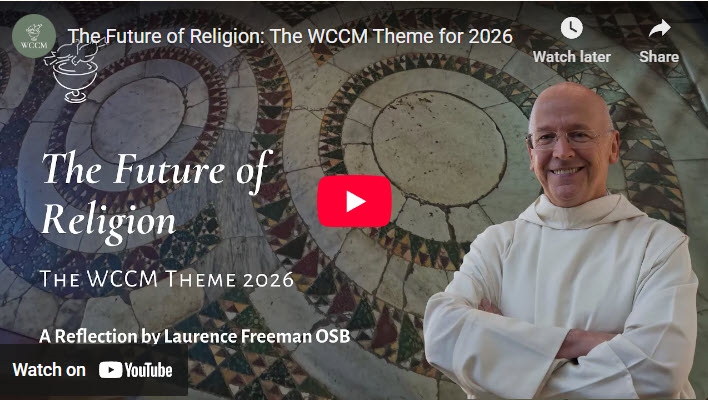
WCCM adopts a theme for each calendar year. The theme for 2026 is The Future of Religion. Click on the image to the right to watcha short video from Fr Laurence Freeman OSB about the topic. Alternative, click here to read more.
There are three pillars to religion: the institutional, the intellectual and the mystical. Without the mystical dimension properly developed, the other two hijack the project of religion. The deep source of authentic religion must always be the mystical. It is the personal and collective experience of God, of ultimate reality, and of meaning and purpose .