

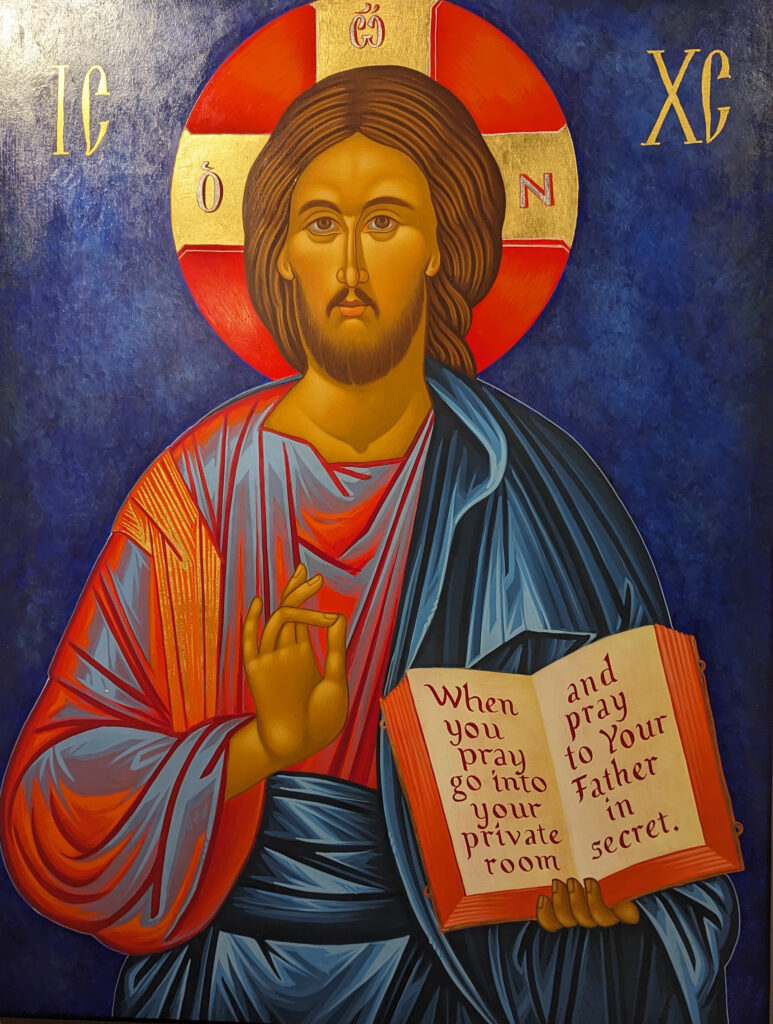
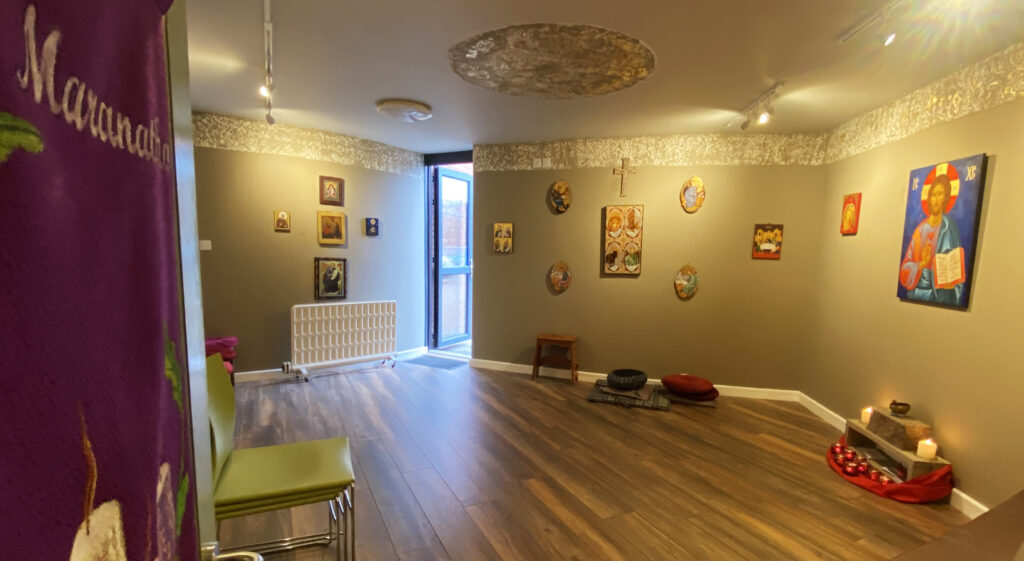
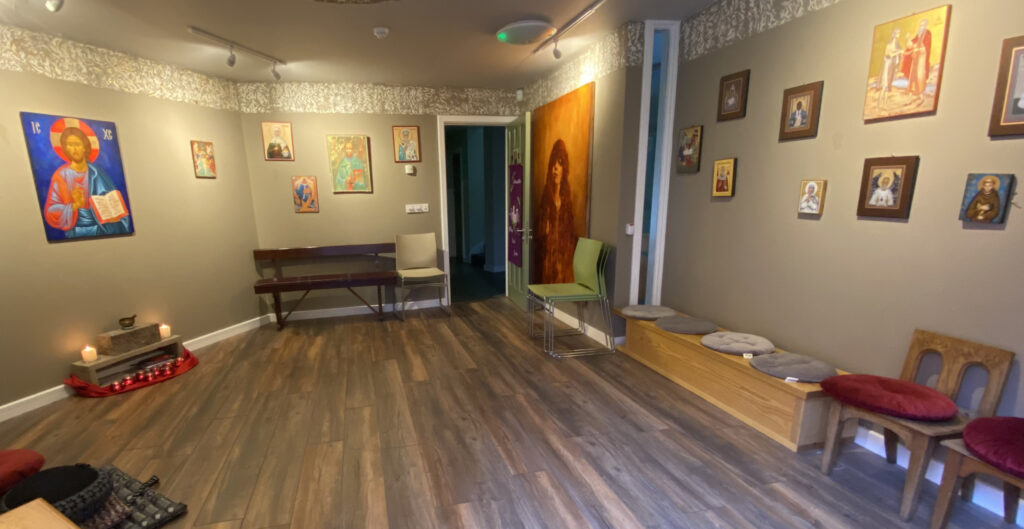
We had a wonderful day with Fr Laurence on Saturday, 02 December in Balally. The theme of his talk was ‘Meditation: The Prayer of the Heart’. On Friday evening Laurence and Fr Jim Caffrey had blessed the beautiful and serene new icon chapel in the Pastoral Centre in Balally. The central icon in the icon chapel is an icon of Christ bearing the words ‘When you pray, go to your private room and pray to your father in secret’, drawn from Matthew 6:6. The ‘private room’ referred to in this passage, this inner room is a symbol of our own heart, it is pointing to the heart of every human being. In Jesus’ time, the Greek word ‘Tameion’ would have been used to describe this inner chamber. Indeed, the word ‘Tameion’ is derived from an older Greek word ‘Tamieion’,meaning ‘treasury’. Meditation, then, is a prayer of the heart.
Laurence went on to say that heart awareness was unfortunately marginalised in the Western Church in recent centuries but there is a growing realisation of its importance for the world today, which is becoming increasingly divided and uncivilised. Indeed, there are divisions present in the Church itself. The world today needs contemplatives, as does the church. But we must never forget that the fruit of meditation is contemplative action in our parishes and communiuties. Contemplation and action, meditation and service are two sides of the same coin, as it were. Contemplatives are called to be active participants in the renewal of the Church. And that begins with personal renewal, allowing Christ to be re-born in our own hearts, deepening our own contemplative awareness.
Laurence quoted Simone Weil as saying that ‘we are lucky to be living in this time when everything is falling apart‘ because things must fall apart before they can be remade. As Weil said ‘We must not wish for the disappearance of our troubles but for the grace to transform them.’ It is difficult to be part of anything that is falling apart and not know what is coming to replace it. But change is a part of life and we must have faith in the work of the Spirit and trust that something different is being born for the good of all.
Laurence reminded us that the growth of the institution of the church was paralleled by the growth of the lay contemplative movement of the Desert Fathers and Mothers. The spread of contemplative Christian communities in ancient times is evident in the number of placenames in Ireland that begin wish words like ‘cill‘ (meaning church) and ‘diseart‘ (literally ‘desert’ but pointing to places of learning founded by Christian monks). For example, the town of Kildare in Irish is Cill Dara (The Church of Oak; Kilkenny, in Irish ‘Cill Chainnigh‘ means the ‘church of Cainnech‘ and Cill Chiaráin, a placename in Connemara (and in county Kilkenny), is named after Saint Ciarán and so on. The word ‘cill‘ itself is ultimately derived from the Latin word ‘cella‘ which referred to the central, enclosed part of an ancient temple. Because the word has come to mean ‘church’ in our modern understanding we may tend to imagine them as large communal buildings like our parish churches today. But initially they were small monastic communities centred on a well known holy monk and may have had no more than three or four in such communities. These were generally communities of lay people. And so, the small weekly groups that meet each week in towns and cities across Ireland and the world are part of that lineage and we must never forget that we are a continuation of that ancient tradition.
Fr Laurence spoke of the role played by John Cassian in recording the prayer practices of the Desert Fathers in his Conferences and how they eventually led John Main to establish a contemplative lay community which has grown to become the World Community for Christian Meditation, of which our Irish community is a part. Cassian, in his ninth Conference, speaks of prayer as a movement towards joining in the prayer of the spirit of Jesus, beyond any sense of ‘my’ prayer. So our prayer is joined with him, in him and through him to the Father. Contemplative prayer is a prayer of the heart that each of us is called to experience for ourselves. And when we have experienced it, we feel a call to join in community with others who have had the same experience and have begun a journey of transformation, of conversion which lasts a lifetime.
In the course of his talk Laurence noted that Naill Charleton had reminded him that one of the irish words for contemplation was ‘marana‘ which is striking because of its closeness to our prayer word ‘maranatha’. The first session of the morning finished with a walking meditation as all present formed a circle around the inner wall of the church and walked with slow, contemplative steps for five minutes. The second session began by inviting questions to which Fr Laurence responded. And our morning concluded with an oblation ceremony for Niall Kennedy – see the separate story below.
The talks were recorded by Paul Daly of Éist and can be purchased online – click on the image to the right to see more.
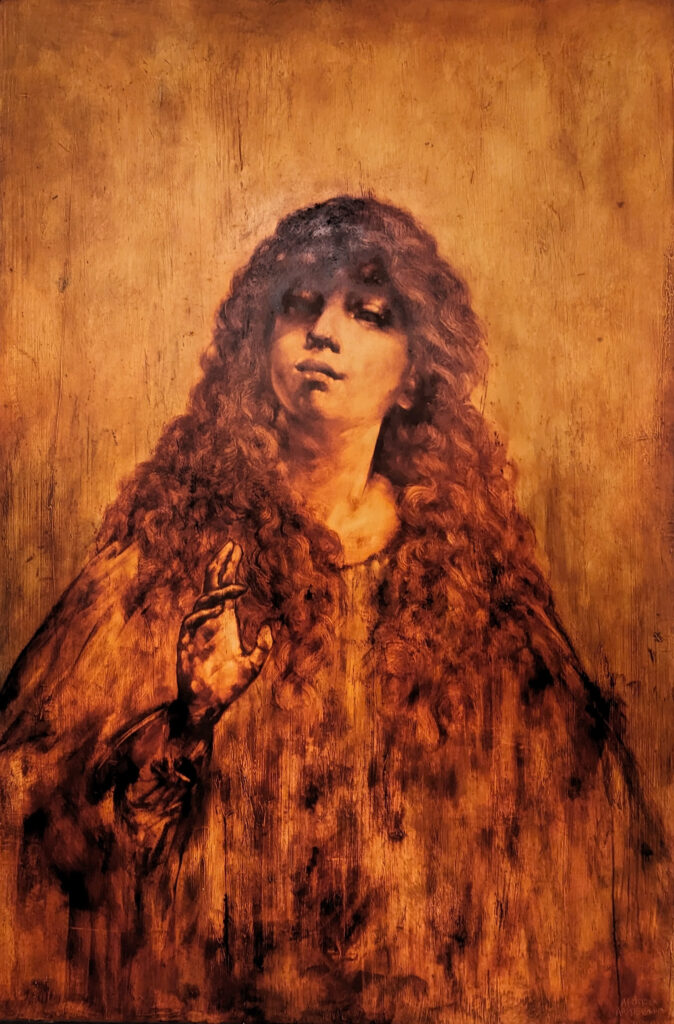
These are some images of the Icon Chapel in Balally Parish Pastoral Centre which was opened and blessed by Fr Laurence Freeman and Fr Jim Caffrey on Friday, 01 December 2023. Like all sacred art, the goal of icons is to lead the viewer into deeper reflection and prayer, and to make the Divine present in some way to the viewer. Iconography was one of the original, man-made windows into heaven. The icon of Christ (above) is at the centre of the chapel. The icon on the left is that of Mary Magdalene.
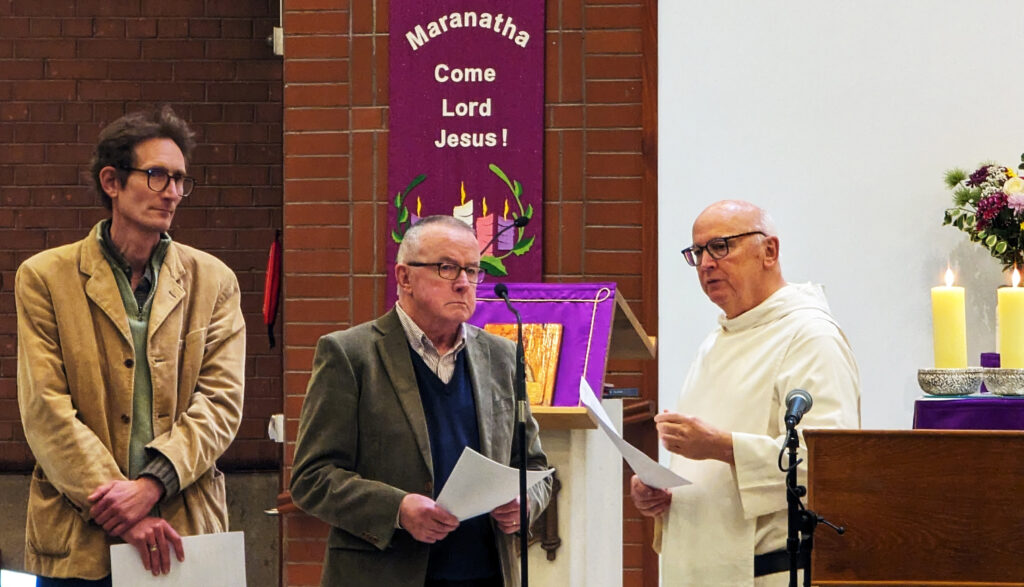
Niall Kennedy Oblation: Our morning with Fr Laurence concluded with an oblation ceremony where Niall Kennedy, from Tipperary town, made a commitment as an oblate of the world community for Christian meditation. He was warmly welcomed by Fr Laurence to that world-wide community. Oblates of WCCM continue their twice-daily commitment to Christian meditation, but also commit to daily practice of lectio divina and reading part of the Rule of Benedict. They also say some part of the Divine Office as their circumstances permit. Becoming familiar with the writings of Fr. John Main, OSB, and Fr. Laurence Freeman, OSB, is also central to the path. Irish Oblates and Friends meet on the first FRiday of each month from 9 to 10:15 a.m. – if you would like to find our more contact  stefandreynolds@gmail.com
Kenosis by Luci Shaw
In sleep his infant mouth works in and out.
He is so new, his silk skin has not yet
been roughed by plane and wooden beam
nor, so far, has he had to deal with human doubt.
He is in a dream of nipple found,
of blue-white milk, of curving skin
and, pulsing in his ear, the inner throb
of a warm heart’s repeated sound.
His only memories float from fluid space.
So new he has not pounded nails, hung a door,
broken bread, felt rebuff, bent to the lash,
wept for the sad heart of the human race.
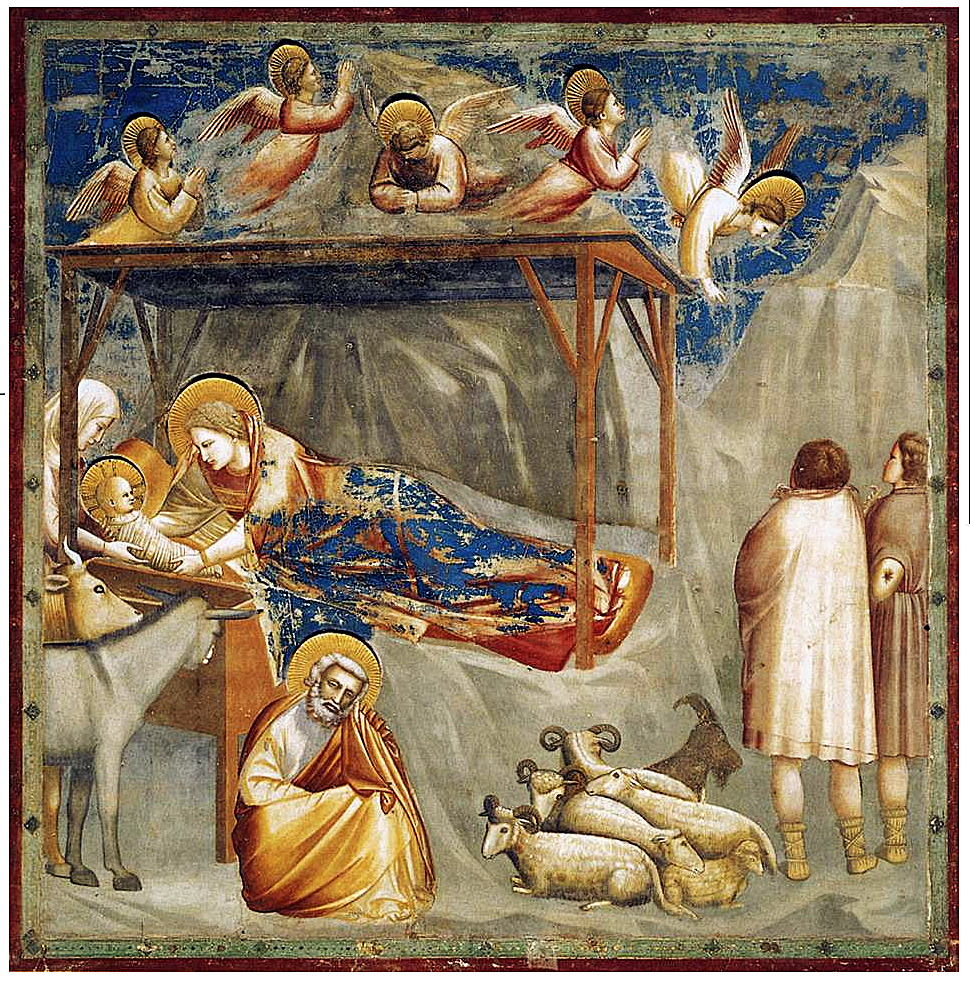
Noel Keating Reflects: Malcolm Guite observes that this portrayal of the infant Jesus is in contrast to ‘many classic portrayals of Mary and the infant Jesus in art and iconography, in which he so often appears as somehow already grown up: a little king, richly robed, sitting up on his mother’s lap, haloed and dispensing blessings and wisdom! Instead, we get the detail of the ‘infant mouth’ working in and out, seeking the comfort of the breast. And this in itself conveys the kenosis perfectly.’
Kat Armas writes of the real and raw birth process reminding us that divinity entered the world through Mary’s ‘broken, refugee, brown, female, naked, stretched, hormonal, marginalized body’ and reminds us that this is ‘where divinity still makes itself most known today.’ She writes that ‘The nativity scene, like much of Western theology, is far removed from the very bloody and very raw and very human process of birth. But these are the kinds of things that make up our faith: the naked, the primal, even the offensive. And while Mary’s story turned out the way she’d hoped it would – with a newborn child in her arms – not all stories turn out that way.
What the nativity scene as we’re used to seeing it fails to show us is that our faith is made of that too: the sadness, the questions, the longing, the despair, the anger. Encompassed within the birth of Jesus is the deeply difficult and deeply beautiful, the sacred and the profane, the spiritual and the material. Like our lives, it was fleshly and carnal—and it was also holy.’
This poem is titled Kenosis. In Christian theology, kenosis (from Ancient Greek, meaning ’the act of emptying”) refers to the ‘self-emptying’ of Jesus. When we speak of kenosis in respect of Jesus, we are indicating our understanding that he set aside his own human desires to become entirely receptive to God’s divine will. As St Paul wrote in Philippians 2 (5-8): ‘In your relationships with one another, have the same mindset as Christ Jesus: Who, being in very nature God, did not consider equality with God something to be used to his own advantage; rather, he made himself nothing by taking the very nature of a servant, being made in human likeness. And being found in appearance as a man, he humbled himself by becoming obedient to death – even death on a cross!’ St John of the Cross urges us too to a similar ‘self-emptying’ of our will and becoming entirely receptive to God and the divine will. And so, at Christmas time especially, we speak of wishing to give birth to Christ in our hearts.
We know how difficult it is to give voice to our contemplative experience because words are inadequate to the task. While in later life Jesus became a powerful teacher, as an infant he could not speak! And yet he is the Word, the Logos in whom and from whom all speech and meaning derive. As Eliot wrote: ‘“We would see a sign”: The word within a word, unable to speak a word, swaddled with darkness.’
The poem paints a beautiful image of the intimacy of mother and child especially in the lines ‘He is in a dream of nipple found, of blue-white milk, of curving skin and, pulsing in his ear, the inner throb of a warm heart’s repeated sound.’ We might say it is this kind of intimacy we hope for as we meditate; where we simply rest in stillness and silence in the presence of God.
Rosemerry Trommer has written a very simple poem called Every Christmas Eve that picks up on this and links it to wrapping Christmas presents:
Surrounded by bows
and ribbons, we sit on the floor
and wrap into the small hours—
all the while we unwrap our hearts
and give them again and again to each other
My cousin Deirdre sent me a wonderful book of reflections by Alan Hilliard called ‘Dipping into Advent’. In the first reflection he tells a story about a sermon a priest had given at Christmas Mass. The priest had simply told his congregation about an incident that Summer when a sparrow became trapped in his living room and of his efforts to catch it so he could set it free. But the bird was frightened and kept flying away, much to his frustration! The priest thought to himself that if he could just be like a bird for one minute he might gain its trust and be able to free it. Alan says his first thought was to wonder what kind of sermon was that on Christmas Day? But the priest added ‘I just told them, I said ‘Jesus became like us so that we could become like Him.’
And that is why we meditate; to strive to become like Him. To put on the mind of Christ. To allow Christ to be reborn in our hearts every day. May our mantra represent for us the heartbeat of God, so that we may experience that tender intimacy for ourselves and learn to love as we are loved. As we begin our meditation we ask that God may open our hearts to that silent presence. May our hearts rest in the heart of God who already rests deep within us.
Kenosis by Luci Shaw from Harvesting Fog (Pinyon Publishing, 2010); also in Waiting on the Word by Malcolm Guite (Canterbury Press, Norwich, 2022)
Kat Armas, Sacred Belonging: A 40-Day Devotional on the Liberating Heart of Scripture (Grand Rapids, MI: Brazos Press, 2023)
Alan Hilliard, ‘Dipping into Advent: Reflections for Advent and Christmas (Messenger Publications, Dublin, 2019)

