

Welcome back to the start of a new school year. By now you will be getting to know the new faces sitting in front of youeach day and you will be hlping the children in your care to feel a sense of belonging to their class and their school. Perhaps you have also resumed the practice of meditation across the school or in your classroom?
If not, perhaps now is a great time to begin. Meditation is really good for children and they take to it like ducks to water. All you have to do is begin. The lesson plans can be found here; if you are resuming the practice then all you will need to do is remind the children of the basics of Lesson 1: to sit with their backs straight and both feet firmly touching the floor, to let go of all thought by reciting their word in four equal syllables for the whole time of the meditation, returning to it gently and lovingly when they realise their mind has wandered. In Christian schools we use the word ‘Ma-ra-na-tha‘, saying it silently in our minds so no one else can hear us.
Alternatively, you might choose to watch one of the videos I made for children on my YouTube page; for example, with this video. If you click on the image to the right you will find a two-minute breath-based grounding video that may also be helpful.
You may be interested in participating for a short time in an online 24-hour Meditation for Peace initiative which takes place over next weekend, beginning on Saturday 21 Sept at 11 a.m. Irish time. You can join in at any time – and for as long or as short a time as is convenient for you – over the 24-hour period.
To find out more about this initiative, which coincides with the International Day of Peace, click here or on the image below.
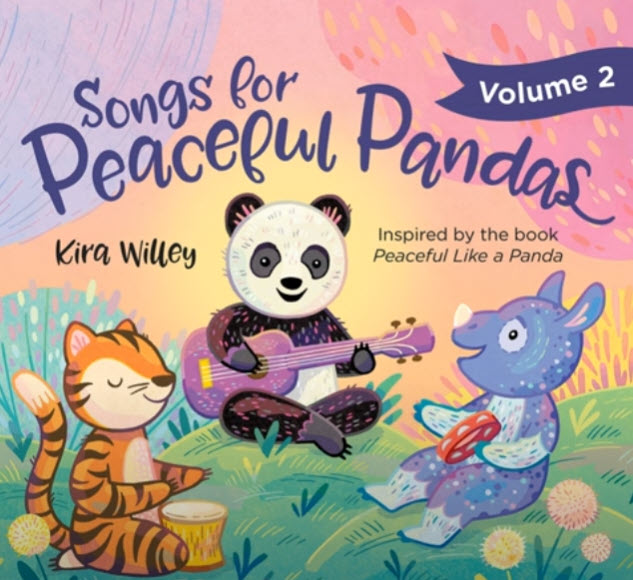
Kira Willey is an award-winning children’s music artist, author, and mindfulness teacher. Her children’s mindfulness book, Breathe Like a Bear, has been translated into eleven languages.
Her second book, Peaceful Like A Panda, was released in 2021. Click on the image to hear her song ‘Give Me Your Worries‘ from the accompanying CD: ‘Give me your worries, I’ll put them all right here in this box. You don’t need them right now. Now you can rest!’
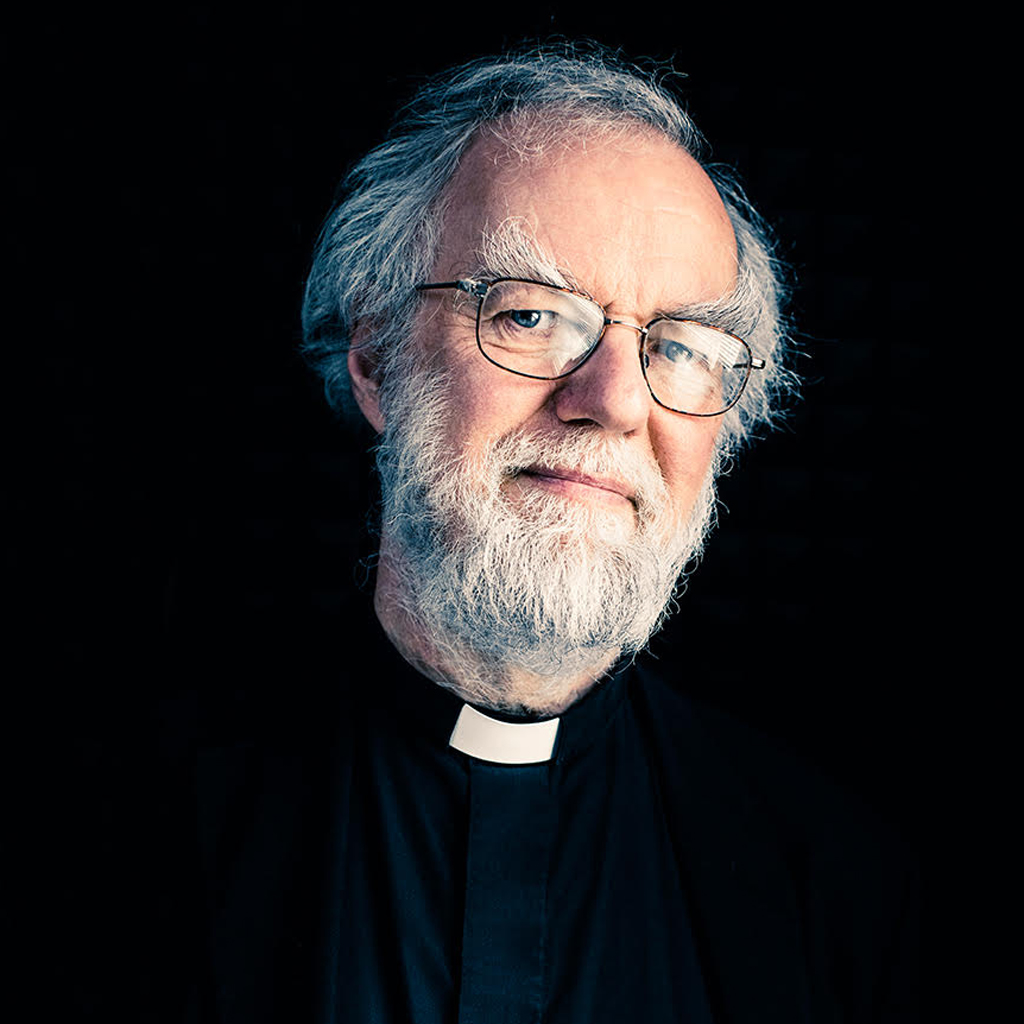
Archbishop Rowan Williams – Archbishop of Canterbury from 2012 to 2022 – will be in Dublin on Sat 28 Sept and Sun 29 Sept next and will give three talks on the theme ‘A Noisy World in Need of Meditation and Service‘ as follows: Saturday (10:30 a.m to 1:00 p.m}. ‘Graced by the Holy Spirit of God.’ Saturday (2:00 to 4:00 p.m.) ‘The Journey Inwards: Contemplation‘ and Sunday, (3:00 p.m. to 5:30 p.m.) ‘Working together for justice and the care of our common home‘ Click image on right to find out more.
The Lost Words Blessing (Poem and Song)
Enter the wild with care, my love
And speak the things you see
Let new names take and root and thrive and grow
And even as you travel far from heather, crag and river
Like the little aviator, sing your heart to all dark matter
May you like the little fisher, set the stream alight with glitter
May you enter now as otter without falter into water
Look to the sky with care, my love
And speak the things you see
Let new names take and root and thrive and grow
And even as you journey on past dying stars exploding
Like the gilded one in flight, leave your little gifts of light
And in the dead of night my darling,
find the gleaming eye of starling
Like the little aviator, sing your heart to all dark matter
Walk through the world with care, my love
And sing the things you see
Let new names take and root and thrive and grow
And even as you stumble through machair sands eroding
Let the fern unfurl your grieving, let the heron still your breathing
Let the selkie swim you deeper, oh my little silver-seeker
Even as the hour grows bleaker, be the singer and the speaker
And in city and in forest, let the larks become your chorus
And when every hope is gone, let the raven call you home.
In 2018, Robert Macfarlane and Jackie Morris produced a book called The Lost Words Spells. The book was a response to how the Oxford English Dictionary had recently edited the ‘Oxford Junior Dictionary’. The junior edition of the Oxford Dictionary is aimed at readers ages seven and up and over the previous decade the editors had removed from that junior dictionary many words used to denote/describe things of nature – because these were words no longer frequently encountered by children!
Some of them were relatively common words such as: acorn, bluebell, ivy, fern, moss, blackberry, dandelion, lark, raven, heron, starling, hazel, heather, goldfinch, grey seal, otter and kingfisher. Hence their inclusion in the words of the song! The editing body of the OED had determined that the words were of little relevance and lessening use to the modern child. They felt young people were no longer familiar with hedgehogs and wrens (also excised) and frogs and buttercups (another casualty!), and so needn’t be introduced to such words that related to nature. They excused their actions on the grounds that they needed room for other, newer words with greater relevance to the modern child. Words like: attachment, blog, broadband, chatroom, database, and social media.
In 2015, authors Margaret Atwood, Helen Macdonald, and Robert Macfarlane, among other novelists and nature writers, expressed their dismay in an open letter to Oxford University Press. They wrote that ‘Childhood is undergoing profound change; some of this is negative; and the rapid decline in children’s connections to nature is a major problem’.
The poem was made into a song in Scottish Gaelic folkloric form by a group of European musicians – Julie Fowlis, Karine Polwart, Seckou Keita, Kris Drever, Rachel Newton, Beth Porter, Jim Molyneux, Kerry Andrew. Although addressed to children, in truth the poet calls each of us to become as little children and to rediscover our relationship with the natural environment, with the world which is our home and of which we are stewards. How can we care for the environment if we don’t pay attention to it? Even though the call is to move beyond words, to discover the spirit of the natural world, we need words to be able to describe – even at a very elementary level – what we see, what we are engaging with in the world outside of ourselves with which we are, nonetheless, intimately connected.
I think the same is true of our inner lives. In the Western world especially, in our secular societies, we are losing words that can reveal to us our true nature. As societies have become increasingly dissociated from formal religious practice, alienated from churches which failed to safeguard their flocks, we are in need of universal language and collective practices that can awaken us to who we are at the deepest level of our being. Silence is such a language and meditation is such a practice. This is why we meditate.
Music: The Lost Words Blessing, Spell Songs, Folk by the Oak, (Quercus Records)

