

CALENDAR of EVENTS for 2026
Balally parish in South Dublin continues its program on the Rule of St Benedict. The program runs once each month, on Saturday mornings from 3 pm to 7 pm – on the last Saturday of each month, with the exception of November (Sat 21 Nov) and December (Sat 12 Dec).
The program explores how ordinary men and women can strive to live the Benedictine Rule in the course of their everyday lives in the modern, busy world. For further information email cinzia.angius@balallyparish.ie
Balally Parish and Christian Meditation Ireland are organising a pilgrimage to the beautiful Abbey of Maredsous in Belgium. The pilgrimage is in honour of Blessed Columba Marmion, an Irish Benedictine monk who was the third Abbot of Maredsous Abbey.
The pilgrimage will take place from Tuesday 14 – Friday 17 April 2026 and is open to all. To find out more or to book your place contact Cinzia Angius through cinziaangius@balallyparish.ie
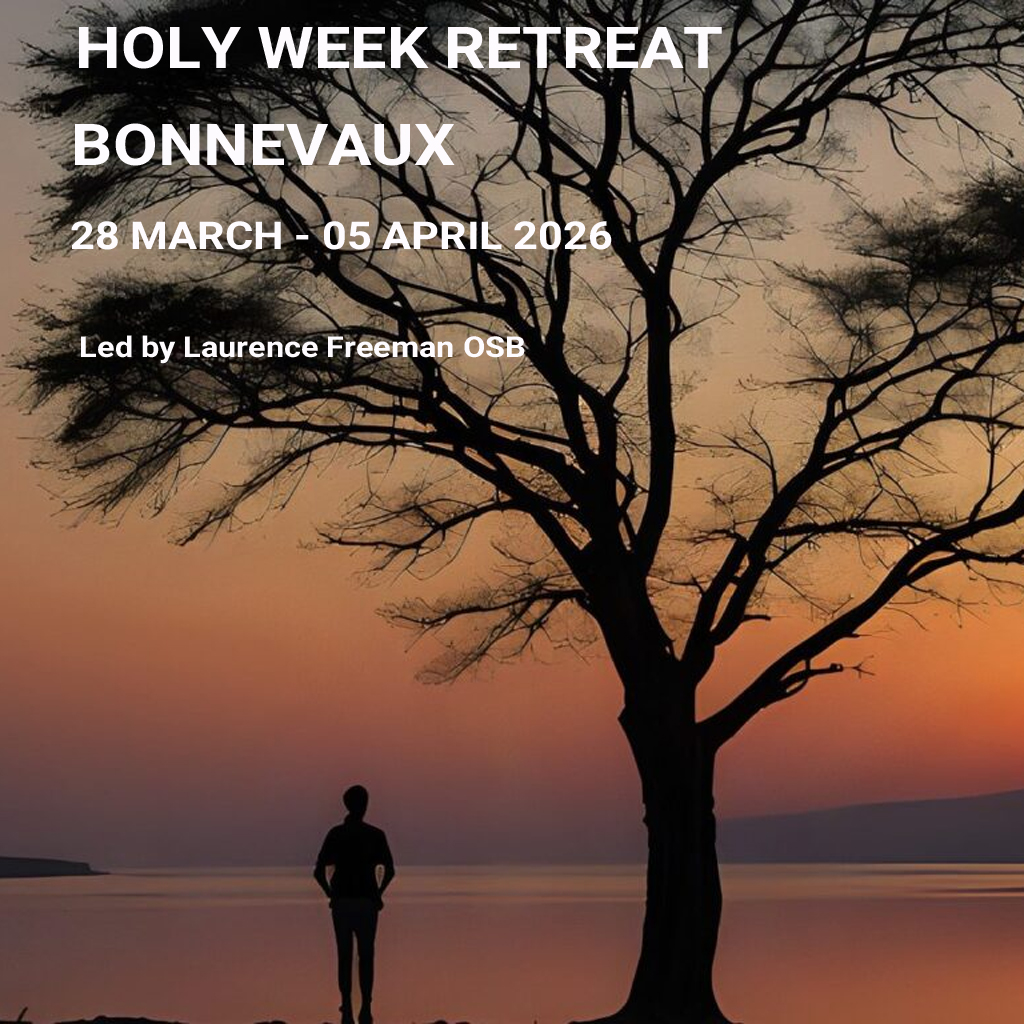
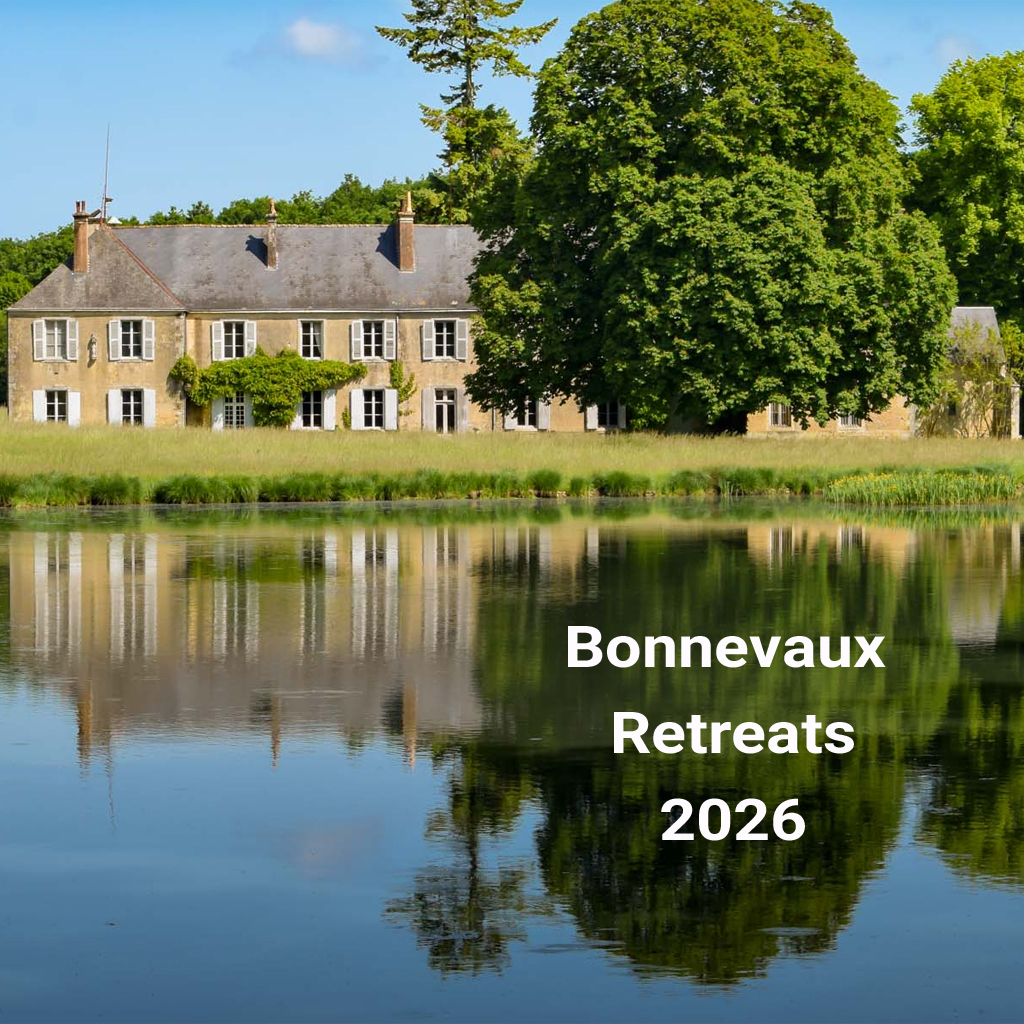
APRIL 20-26: Wisdom from Bonnevaux
Fr Peter Murphy, a priest from New Zealand, and coordinator of the Bonnevaux Community, will give a series of talks over these five days in April. Further details will follow.
On Sunday, 17 May 2026, RTE Live Broadcast of a Contemplative Eucharist from Balally Parish Church. Fr Jim Caffrey will preside at the Mass and Fr Laurence Freman will deliver the sermon.
JULY 07-09: Celtic Pilgrimage to Clonmacnoise and other Celtic monastic sites in Offaly , Galway and Clare , with times for prayer and meditation at each day. Led by Rev Philip McKinley (Church of Ireland pilgrimage director for Kildare and Clonmacnoise)
Saturday, 20 September 2026 ( 10am-5pm) Retreat Day led by Judith Valente. Judith is an award winning journalist who lives in Chicago. She is a Benedictine Oblate of the Monastery of Mount St Scholastica in Kansas. She has written many books on Benedictine spirituality, most notably the classic ‘How to Live: What the Rule of St Benedict Teaches Us About Happiness, Meaning and Community’. She is also an expert on the work of Thomas Merton. More details to follow in due course.
The Annual General Meeting of Christian Meditation Ireland will take place online on Monday, 18th May 2026 at 8 pm to facilitate the attendance of as many people as possible from the Irish community of meditators.
The meeting will take place over Zoom and you will be able to join in the event by clicking here. The directors will report on their work over the past year and the accounts will be presented for adoption. While only those designated as ‘members’ – effectively the shareholders of Christian Meditation Ireland clg, will v have a vote, the AGM is an opportunity for all to learn about the work of the community nationwide.
Calling Jesus Names by @frankdpoetry
The woman at the well calls Jesus names
each one refining, testing him.
This unsettling enemy, this “Jew”
speaks to her with no edge, requests a drink
then splashes her with a fresh rejoinder.
He speaks of Yaweh in a new way
addresses her as a sister, this “Sir.”
He sees her struggles, bares her secrets
presents her life without animosity,
tells her past truth and believes in her future.
She hails him as Jacob or Jospeh, this “Prophet.”
In his real presence she knows herself.
She is drenched, a new life wells up in her
her desiccated way begins again
and she wonders, perhaps, is this the “Christ.”
Reflection by Noel Keating: This poem is a reflection on the Gospel story about the Samaritan woman who encountered Jesus at the well. When she came to draw water he asked her for a drink and she replied ‘What? You are a Jew and you ask me, a Samaritan, for a drink?’ In the course of their conversation she realised he, a complete stranger, knew about her private life which led her to realise he was a prophet. Their conversation quickly turned to a level of deep spiritual sensitivity and intimacy, in the course of which Jesus told her ‘The hour will come – in fact it is here already – when true worshippers will worship the Father in spirit and truth: that is the kind of worshipper the Father wants. God is spirit, and those who worship must worship in spirit and truth.’
The title of the poem is Calling Jesus Names and shows how the woman at the well approaches this stranger through the filters of her conditioning. In the poem she refers to him as a ‘Jew,’ a ‘Sir,’ a ‘Prophet,’ before recognising that he might in fact be ‘the Christ.’ When we sit in meditation we almost always begin in light of our own conditioning and preoccupations. We might say that as we identify with our thoughts – linked to our perceived roles such as ‘friend’ or ‘sibling’ or ‘parent’ or ‘grandparent’ or to judgements such as ‘achiever’ or ‘failure’ and so on. In tune with our poem, we call ourselves these names. But as we enter the silence more deeply, we let go of those names and discover who we truly are in the centre of our being.
Just as Jesus accepted the woman as she was – he speaks to her with no edge – so too we discover we are accepted and loved just as we are. And just as the woman arrived at the well to find Jesus already sitting there, it is the same with us when we sit down to meditate.
We find Jesus is already there, waiting for us – knowing us more intimately than we know ourselves and accepting us, aware of our struggles and failings, without judgement. Instead, he offers us ‘the water that … will turn into a spring inside us, welling up to eternal life.’ The mantra is our water jar and each repetition draws in fresh water from the inner well and we too find ourselves drenched, as a new life wells up in us.
There is one line that stands out for me in the poem: In his real presence she knows herself. Through our daily practice we find we can see beyond the ‘names’ that we call ourselves, and we find our attachment to them dissolves. We discover our true identity, our true self, who we are in God and who God is in us. We allow the Christ within to define us instead. In his real presence we come to know our true selves.
John Main observed that ‘Prayer is not possessing, not controlling but sheer celebration of being. We come to this celebration because meditation leads us to centredness, to the still point. In each person there is a still point that is me but is not exclusively me. Thomas Merton expressed this essential truth in his own unique way: ‘At the centre of our being is a point of nothingness which is untouched by sin and by illusion, a point of pure truth, a point or spark which belongs entirely to God, which is never at our disposal, from which God disposes of our lives, which is inaccessible to the fantasies of our own mind or the brutalities of our own will. This little point of nothingness and of absolute poverty is the pure glory of God in us. It is so to speak His name written in us… It is like a pure diamond, blazing with the invisible light of heaven.’
This is the fruit of our practice: In his real presence we come to know our true selves.

