
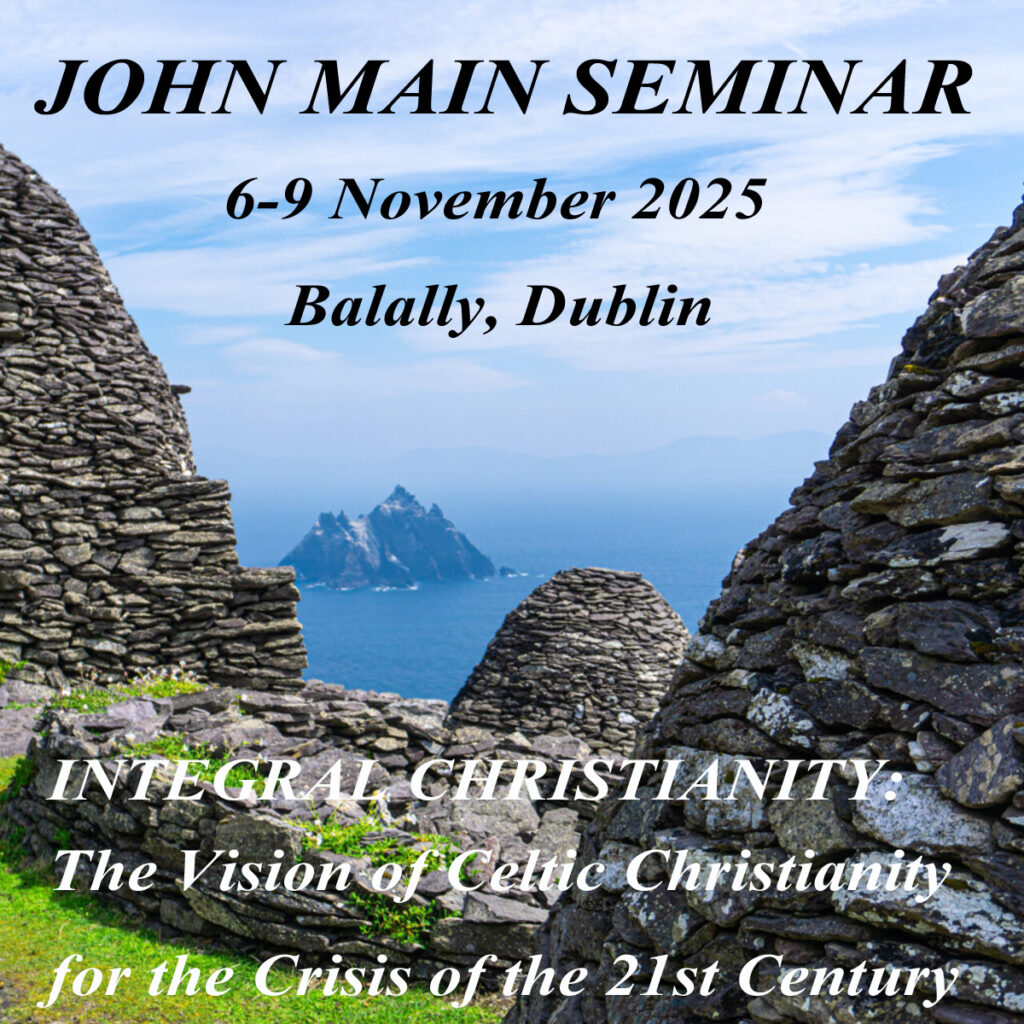

The John Main Seminar, an annual event of the World Community for Christian Meditation, will take place in Ireland this year from 6-9 November 2025 and will be based in Balally Parish, Dublin. Fr Jim Caffrey, PP Balally Parish, is acting National Coordinator for Christian Meditation Ireland. Click on the image above to find out more.
It is a gift to have the seminar in our own country and you are encouraged to attend in person. However, it will also be possible to participate online. The sessions will be live streamed, and recordings will be made available a few hours after each transmission for those unable to join live. Further details will be available in due course.
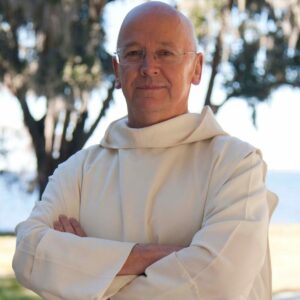
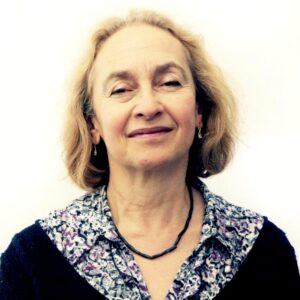
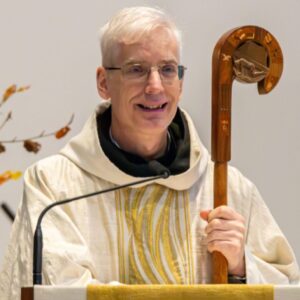

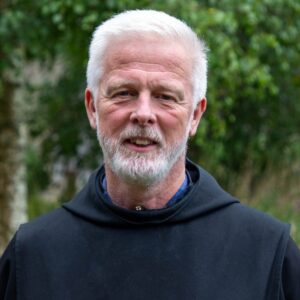
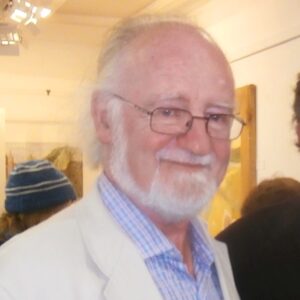
The Keynote speakers are Laurence Freeman, Jane Williams, Abbot Columba McCann OSB (Glenstal Abbey), Barry White, Br. Colmán N. Ó Clabaigh OSB (Glenstal Abbey) and Irish poet John F. Deane. Jane Williams is Jane Williams is the McDonald Professor of Christian theology at St. Mellitus College England and is married to the former Archbishop of Canterbury Rowan Williams.
MEET-UP Saturday 27 September from 10 am to 1 pm - See you there

The team organising the John Main Seminar has done a great deal of preparatory work organising the event. They are now looking for your help in assisting with some practical tasks over the three days of the event – for example helping with stewarding, assisting with meals and snacks at break times, perhaps offering transport for key speakers to and from their hotel and so on. There are countless ways in which you may be able to make this a truly rewarding event for all participants. There will be a Meet-Up on Saturday 27 September 2025 from 10 am to 1 pm – a morning of prayer, meditation and reflection and time to discern who is available to help, on which days and and in what capacity. The morning will include a talk from Fr Laurence Freeman. Let’s show WCCM what we can do – please join us on 27 September, 10-1:00
If you would like to volunteer and can’t attend on 27 September, please contact Cinzia via cinziangius@gmail.com or by phone on 083 0165382
Swimming, One Day in August by Mary Oliver
It is time now, I said,
for the deepening and quieting of the spirit
among the flux of happenings.
Something had pestered me so much
I thought my heart would break.
I mean, the mechanical part.
I went down in the afternoon
to the sea
which held me, until I grew easy.
About tomorrow, who knows anything.
Except that it will be time, again,
for the deepening and quieting of the spirit.
Reflection by Noel Keating: On a break earlier this month I spent a week by the sea with my family and managed to swim most days. The idea of living beside the sea is one that holds great appeal for me. There is something very healing about being by the sea, about the sound of the waves and hourly changes on the sand by the shore. There is a real sense of wonder at the beauty and power of the elements bringing about constant change and a sense of being grounded in nature. The sea breeze cleared away the cobwebs of the mind, leaving me feel light and fresh – feeling renewed in body, mind and spirit.
Mary Oliver’s poem suggests that she feels likewise: It is time now, I said, for the deepening and quieting of the spirit among the flux of happenings.’ So she went down in the afternoon to the sea which held her, until she grew easy. I love how she describes that the sea held her. It takes a certain letting go and a certain faith in the waves to let them hold you – it can be hard to relax if your mind continues to be wary of the possibility of a rogue wave or an undercurrent pulling you out. While it is important to be aware of such possibilities and to take care in choosing where to enter the water, it is also good to let go of the brain’s primitive anxiety for a while and trust in the water.
For Oliver, nature always soothes her spirit. She lets herself be held and grows easy. Tomorrow will bring its own concerns and there is no need to try to meet them today! Nonetheless she knows that it will be time, again, for the deepening and quieting of the spirit, which, of course, is why we meditate every day, twice a day. Wendell Berry has a poem that mirrors Mary’s, called The Peace of Wild Things. In his case, he goes inland waters to find what he calls the peace of wild things.
The Peace of Wild Things
When despair for the world grows in me
and I wake in the night at the least sound
in fear of what my life and my children’s lives may be,
I go and lie down where the wood drake
rests in his beauty on the water, and the great heron feeds.
I come into the peace of wild things
who do not tax their lives with forethought
of grief. I come into the presence of still water.
And I feel above me the day-blind stars
waiting with their light. For a time
I rest in the grace of the world, and am free.
Berry goes to lie down where the wood drake rests in his beauty on the water, and the great heron feeds. Isn’t that a beautiful phrase – where the wood drake rests in his beauty on the water! What a lovely image to bring with us to our meditation each day – to bring our beauty to rest in God’s presence so that we can come into the peace of wild things, letting go of our preoccupations and all forethought. While Oliver enters the sea, Berry comes into the presence of still water and for a time rests in the grace of the world, and he finds he is free. In nature, both of our poets are able to let go of all that hinders their awareness of what is. Both of these poems are in harmony with the Celtic Christian spiritual tradition. Peter Creagh suggests that there are four prevailing themes that inter-weave themselves through the Celtic experience of the Creator and Creation, These four themes – Presence, Place, Prayer and Pilgrimage – form the essence of Celtic Spirituality and are echoed in the two poems considered in this reflection.
Philip Newell reminds us that a key characteristic of Celtic Christianity was ‘its understanding of the essential oneness of life. In the Celtic Christian world, heaven and earth are not divided. Spirit and matter are woven together inseparably’. They operated from a non-dualist perspective; they sensed the in-dwelling Presence of the Creator in all of creation – that deep connection to Him ‘in whom we live and move and have our being’. In his book, Paths of Spirituality, John MacQuarrie described this key characteristic memorable when he said the Celts were ‘a God-intoxicated people’. They saw themselves as having a deep-seated relationship with God, in all aspects of their everyday life. This is manifest in Ireland to this day, in those areas where Irish is spoken, in the standard way of greeting another which is ‘Dia duit’, meaning ‘May God be with you’. This is a protective blessing to which the other responds in kind with the phrase ‘Dia is Muire duit’, meaning “May God and Mary be with you.”
Is this not why we meditate – to let go of all that hinders our awareness of the mystery in which we live and move and have our being? Where possible, we return to the same place each time we meditate and around the same time so that we come to see our meditation corner as a place of refuge where we can find stillness and silence. May our practice allow us to rest in the grace of the world, and be free to be who we truly are. May it lead always to a deepening and quieting of the spirit.

